

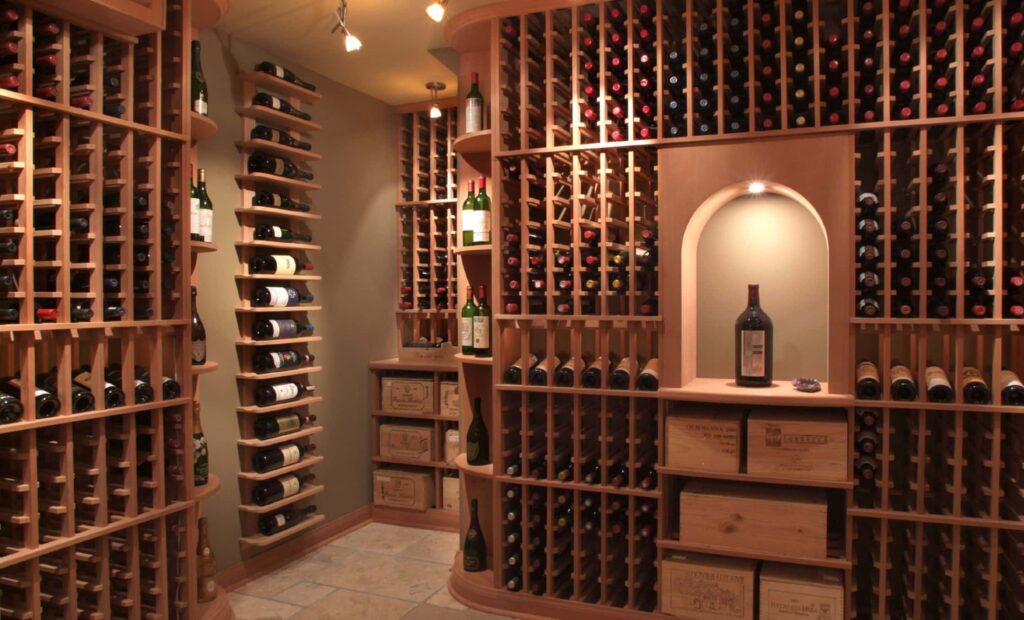
An underground basement wine cellar is one of the most technically sound and value-resilient ways to create long-term wine storage in a residential property. From a performance standpoint, basements offer natural temperature stability. From a resale standpoint, a properly executed underground cellar reads as permanent infrastructure rather than a decorative upgrade.

This matters because wine cellars only retain value when they are built as controlled environments that support proper wine aging. When executed correctly, a basement wine cellar combines climate efficiency, structural integrity, and premium design into a space that buyers, appraisers, and collectors recognize as legitimate.

This guide breaks down the process end-to-end, from pre-construction assessment to technical envelope design, materials, cooling, lighting, and common mistakes, while answering the micro-intents buyers and homeowners search for most often: Cost drivers, materials, technical requirements, and risks.

Why The Basement Is The Ideal Location For Underground Wine Storage

Basements are uniquely suited for underground wine storage because they naturally support the environmental conditions required for stable wine preservation. Below-grade spaces experience less temperature fluctuation than above-grade rooms, reducing the workload on a wine cellar cooling unit and improving long-term system reliability.

From a structural perspective, basements also allow for thicker insulation assemblies and properly sealed enclosures without impacting visible living space. This makes it easier to create a true climate-controlled envelope that aligns with fundamental wine cellaring principles.

For homeowners planning a long-term solution, a basement cellar offers the highest ceiling for performance and resale credibility, especially when designed following our Ultimate Guide to Custom Wine Cellars and modern basement wine cellar design ideas.

Pre-Construction: Assessing Your Basement’s Environment

Before a single wall is framed or a cooling unit is selected, the basement environment must be evaluated. This step determines whether the cellar will function correctly or struggle long-term.

Evaluating Foundation Moisture & Humidity Levels

Basements are prone to moisture migration through foundation walls. Left unaddressed, this moisture can overwhelm humidity control, damage finishes, and compromise wine integrity.

A proper assessment includes:

  • Checking for visible efflorescence or damp spots
  • Measuring ambient humidity levels
  • Identifying any history of water intrusion

If moisture is present, mitigation must happen before construction. A wine cellar must be properly sealed from external moisture sources to support consistent storage conditions and protect finishes.

Understanding ideal wine cellaring temperatures and humidity targets is critical at this stage, as it informs insulation, vapor barrier, and cooling decisions.

Determining The Best Corner For Natural Temperature Stability

Not all basement locations perform equally. Exterior foundation walls and corners typically experience more stable temperatures than interior partitions or utility-adjacent areas.

Selecting the right corner reduces heat load on the wine cellar cooling unit, improves energy efficiency, and lowers long-term operating costs. This decision also impacts racking layout and wall construction later in the process.

Alcohol Cellar Genuwine

The Technical Basics: Creating A Climate-Controlled Envelope

A wine cellar succeeds or fails at the envelope level. This is the system of walls, insulation, vapor barriers, doors, and ceilings that separates the cellar from the rest of the home.

Why A 6-Mil Vapor Barrier Is Non-Negotiable

A continuous 6-mil vapor barrier is essential to prevent moisture migration into the cellar walls. Without it, warm, humid air can penetrate insulation cavities, leading to condensation, mold, and unstable wine storage conditions.

The vapor barrier must be continuous, sealed at all seams, and properly integrated around electrical boxes, ducts, and penetrations. Partial or improperly installed barriers are one of the most common failure points in DIY or contractor-led builds.

Selecting The Right R-Value Insulation For Wine Cellar Walls

Insulation choice directly impacts temperature stability and cooling efficiency. Wine cellar walls typically require higher R-values than standard interior partitions because the goal is thermal isolation, not comfort conditioning.

Closed-cell foam or rigid board insulation systems are commonly used because they provide both insulation and moisture resistance. In many builds, water-resistant drywall is used on the interior face to further protect against humidity exposure.

Using the correct insulation strategy supports consistent proper wine aging and reduces strain on mechanical systems.

Choosing Between Through-The-Wall & Split Cooling Systems

Selecting the right wine cellar cooling unit depends on cellar size, layout, noise sensitivity, and long-term serviceability.

  • Through-the-wall systems are simpler to install and cost-effective for smaller cellars.
  • Split systems allow for quieter operation and greater flexibility, especially in larger or glass-enclosed spaces.

Emerging options and system refinements are covered in ongoing innovations in custom wine storage, which increasingly focus on efficiency, monitoring, and scalability.

Structural Essentials: Flooring And Doors

Structural finishes in a basement wine cellar must tolerate humidity, temperature variation, and long-term use without degrading.

Why You Should Avoid Carpet & Standard Interior Doors

Carpet traps moisture and odors, making it unsuitable for underground wine storage. Hard surfaces such as sealed stone, tile, or treated concrete perform far better over time.

Standard interior doors are another frequent mistake. A wine cellar door must be insulated, gasketed, and properly sealed to prevent air exchange. Glass doors are acceptable only when they are purpose-built and thermally rated.

For visible or showcase cellars, climate-controlled glass wine rooms combine visibility with performance when engineered correctly.

Sealing The Threshold For Air Tightness

Even the best cooling system cannot compensate for air leaks. Door thresholds, frames, and wall penetrations must be sealed to maintain stable temperature and humidity control.

Air leakage leads to short cycling, inconsistent temperatures, and premature equipment wear, all of which undermine long-term wine preservation.

Custom wine cellar LA

Wine Racking And Layout Fundamentals

Racking design determines how efficiently the cellar functions and how it is perceived visually.

Maximizing Bottle Capacity Vs. Aesthetic Display

There is always a tradeoff between maximum capacity and visual openness. High-density racking favors storage efficiency, while display-oriented layouts emphasize accessibility and presentation.

The right balance depends on the size of the wine collection, intended use of the space, and whether the cellar is meant to function as a showpiece or a pure storage room.

Understanding Different Racking: Wood Vs. Metal

Wood racking offers a traditional aesthetic and can support high bottle counts. Metal systems provide a lighter, more modern look and greater flexibility.

Both approaches can support proper wine storage when designed correctly. The choice should align with the home’s overall aesthetic. Whether you are leaning toward traditional wine cellar craftsmanship or modern wine cellar aesthetics, we often recommend using premium materials and finishes for wine cellars.

Essential Lighting: Protecting Your Collection From UV Damage

Lighting in a wine cellar must enhance visibility without compromising the wine.

Incandescent and halogen fixtures generate heat and UV radiation, both of which accelerate wine degradation. Modern LED systems eliminate these risks while offering precise control over brightness and color temperature.

Proper lighting design:

  • Highlights bottle labels and racking geometry
  • Avoids heat buildup
  • Improves photography and presentation

Professionally designed luxury wine cellar lighting solutions protect the collection while elevating the overall experience of the space.

Common Mistakes Beginners Make When Building A Basement Cellar

Most wine cellar failures stem from avoidable planning errors.

Common issues include:

  • Skipping vapor barriers
  • Undersizing the wine cellar cooling unit
  • Using standard drywall instead of water-resistant drywall
  • Ignoring air sealing details
  • Overbuilding relative to the home’s value tier

These mistakes often lead to inconsistent temperatures, poor humidity control, and costly retrofits. Reviewing essential wine cellar investment considerations before construction helps avoid these pitfalls.

Start Your Underground Wine Cellar Project Today With Genuwine

A basement wine cellar is a technical build first and a design project second. When planned correctly, it delivers stable wine storage, supports proper aging, and enhances the long-term value narrative of the home. Peruse our bespoke wine cellar design gallery for ideas.

Working with a team experienced in cellar design and construction ensures the space is properly sealed, correctly cooled, and built to perform for decades. If you are considering transforming your basement into a wine room, the next step is a professional assessment tailored to your space and goals.

Learn more about the wine cellar design and construction process or schedule a professional design consultation to evaluate your basement and define the right scope for your project.