

Why Proper Planning Matters

A proper wine cellar is a controlled environment disguised as beautiful architecture. It safeguards provenance, choreographs how you select and serve, and reads as if it has always belonged to your home. Below is the planning sequence we use on private estates, penthouses, and destination restaurants, expanded with the nuance that separates a good cellar from a legacy one:

Protecting Your Collection

Wine rewards consistency. The most valuable thing you can give it is calm: Steady temperature, gentle humidity, low light, and zero drafts. When the envelope is detailed well, insulation is continuous, vapor barrier on the warm side, penetrations sealed, your cooling system works less, lasts longer, and quietly holds the line. That is what protects vintages through seasons and parties.

Avoid Expensive Missteps

The costliest errors are invisible until it’s too late: A broken vapor seal behind a sconce, single-pane doors that condense, drivers buried in the cold zone, a unit sized to spec sheets instead of the actual heat load from people, glass, and lighting. Planning exposes these risks early and puts the money where it matters.

Designing For The Way You Live

A cellar should improve your daily ritual. That means racking that matches your buying habits, lighting that flatters labels and faces, a path of travel that makes service effortless, and acoustics that signal quiet luxury. When a room is honest about its purpose, you use it more and enjoy it more.

Step 1: Define Your Wine Collection Goals

Start by mapping how you collect and how you entertain. The room will mirror those patterns.

Types Of Wine Collectors

Hobbyist

You keep a rotating selection and open things often. You want proximity to the action, dining room or adjacent corridor, plus quick access to varietal favorites. Priorities: A beautiful display, intuitive organization, and a cooling system that’s simple to live with.

Entertainer

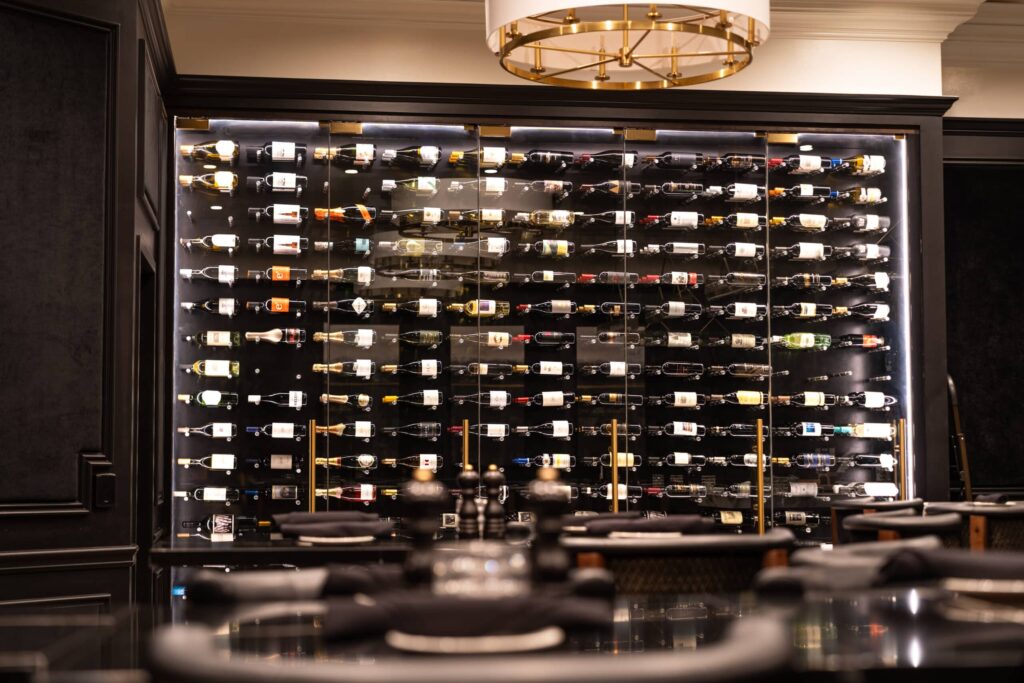
You host regularly. The cellar doubles as theater: Label-forward display, a staging counter for decanting, and sightlines that pull guests in. You still need dependable reserves out of direct view, so blend gallery presentation in the foreground with high-density storage in the background.

Serious Collector

You’re creating depth and aging. Your room needs volume, mixed-format logic, and conditions that don’t drift when the house gets busy. A traditional insulated room or a spiral installation keeps variables controlled. Add a smaller “front-of-house” display if you want presentation without exposing your main reserve.

Assessing Bottle Capacity Needs

Capacity with intention

Don’t chase a headline bottle number. Right-size to your real buying habit and add 20-30% headroom. Plan mixed-format zones (750 ml, magnums, 3L+) from the start so large bottles don’t become an afterthought. Decide the split between display (your curated, high-visibility edit) and reserve (bulk, long-term). Many clients are happiest around a 15-25% display ratio; it keeps the room visually calm while leaving real space for aging.

Organization & Cataloging

Organization That Behaves Like You Do

There’s no single “correct” map. Old-world heavy collections tend to sort by region → subregion → producer → vintage. New-world leans grape → region → producer. Label-forward systems are excellent for selection by eye; binning excels at volume. Pair the physical scheme with a digital catalog and place discreet sensors inside the envelope so you can see temperature and humidity without opening a door.

Step 2: Choose The Right Cellar Location

Where the cellar lives determines how hard the engineering must work. Here are some common options: 

Basement

Usually the most forgiving location: Cooler, darker, quieter. It still demands a real envelope, but the starting conditions reduce mechanical strain. If you want a tasting table or lounge seating, basements often give you that square footage without compromising the main floor.

Dining Room Or Main-Floor Feature

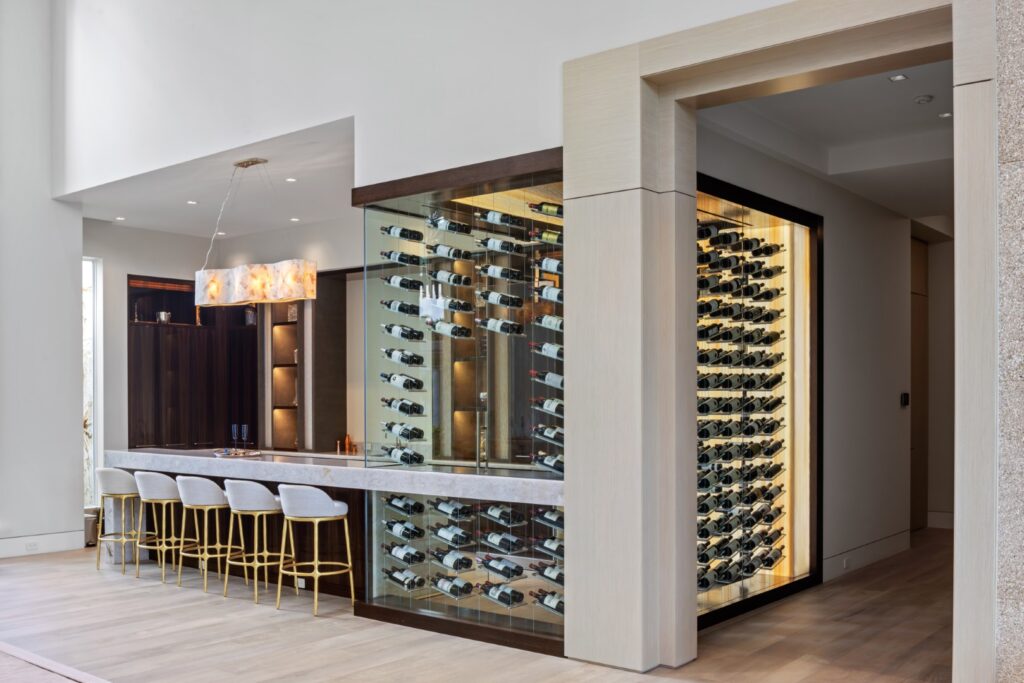
The showpiece move. Think insulated, framed glass with quality gaskets, hardware that holds alignment for years, and lighting that can be theatrical on command and subdued during service. You’re trading easy visibility for more complex thermal detailing. Do it right and the room becomes the spine of your home.

Under-Stair Or Architectural Niche

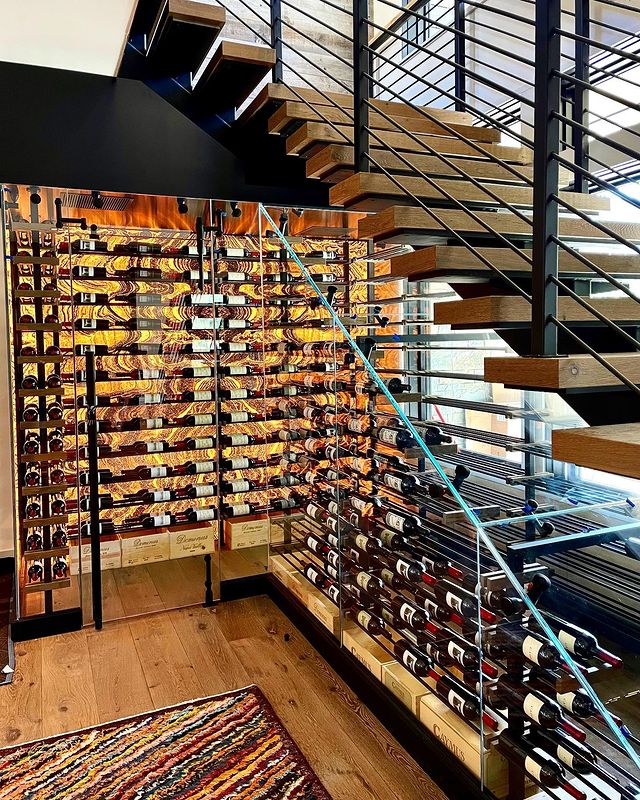
Perfect for curated selections and smaller footprints. Geometry is the constraint; craftsmanship is the unlock. Closed-cell spray foam often wins here because it insulates and seals in one pass, tracking odd cavities without gaps. Tidy access panels protect serviceability without disturbing the linework.

Converted Closet Or Pantry

Entirely viable. The standard mistakes, venting into the room, ignoring the vapor barrier, and under-sizing doors, are avoidable with a proper plan. If the closet sits near heat sources (kitchen ranges, afternoon sun), correct load calculations and door selection matter even more.

Make The Footprint Work Harder

Think vertically. Full-height racking with consistent module widths keeps lines crisp and makes reconfiguration easy. Use label-forward panels or pegs for the “gallery” area and reserve deep bins for the rest. A slim prep counter near the door becomes a quiet luxury during service: Somewhere to cut foil, set decanters, and stage stems without walking away from guests.

wine cellar in basement - Genuwine Cellars

Step 3: Establish A Budget

Great planning simplifies budget decisions. You’re choosing where to concentrate value.

What moves the needle:

Glazing

Insulated, framed assemblies with thermal breaks, smart gaskets, and door closers that don’t drift. Minimal sightlines; maximal performance.

Racking and millwork
Premium hardwoods and hand-finishing, or architectural metal with gallery precision. Design mixed-format logic early so it doesn’t look patched later.

Cooling strategy

Self-contained units are straightforward. Ducted systems relocate noise. Split systems deliver the quietest experience and the cleanest elevations.

Lighting

Low-UV LED, correct color temperature, dimming, and beam control. Create light into architecture, not onto it.

Site realities

Structural work, power and drain routes, glass handling, and delivery logistics.

The envelope

Insulation continuity, vapor control, and air sealing. Put your money here, and the room performs for decades.

Step 4: Plan Infrastructure Early

The cellar is an architecture inside your architecture. Detail it that way.

Place the vapor barrier on the warm side of the walls and ceiling, keep it continuous, and seal every penetration, including electrical boxes, recessed fixtures, and pipe chases. In complex geometry, closed-cell spray foam is your friend; it insulates and creates a robust air/vapor layer in one trade, eliminating fussy overlaps. Avoid putting heat-generating drivers and transformers inside the conditioned volume.

Stone, porcelain, sealed concrete, or engineered wood with stable cores. They feel solid underfoot and shrug off ambient moisture. Design thresholds and sills that manage condensation events gracefully, subtle slopes and concealed drains where appropriate, so occasional wipe-downs don’t become emergencies.

Doors & Hardware

  • For wood doors: Insulated cores, quality gaskets, and alignment that stays true.
  • For glass: Insulated, framed assemblies with thermal breaks and reliable compression at every contact point. 

Choose pivots and closers rated for the door weight and daily usage. The difference between “works on day one” and “still perfect on year five” lives in these details.

Cooling Systems & Requirements

Cooling that disappears into the architecture:

  • Self-contained: Fast, compact, good for modest rooms when you accept the visible unit.
  • Ducted self-contained: Moves noise and bulk outside the room; requires planning for supply and return routes.
  • Split (ducted or ductless): The gold standard for quiet and flexibility; the condenser sits remotely, protecting the serenity of the space.

Give the system what it needs: A dedicated circuit, condensate management, fresh air and clearance per spec, and sensor placement where air actually touches bottles. Think about service like a future owner would: Clear access, labeled shutoffs, valves not buried behind millwork.

Lighting As Craft, Not Afterthought

Use light in layers: A soft base wash to read the room, focused grazers to articulate texture, and tight accent beams for hero bottles. Keep color temperature consistent across fixtures to avoid patchwork. Program scenes, tasting, service, showcase, so the room shifts mood without handheld theatrics.

Acoustics & Vibration

Silence is part of luxury. Ducted or split systems help. So do resilient mounts, soft-close hardware, and dense materials. Specify underlayment and gasketing with the same discipline you bring to insulation.

Step 5: Select A Design Style

The Difference Between Traditional and Modern Cellars

Style is how the room speaks. Performance is how it behaves. You want both to speak the same language.

Custom wine cellar LA

Traditional Wine Cellars

When heritage suits the house.
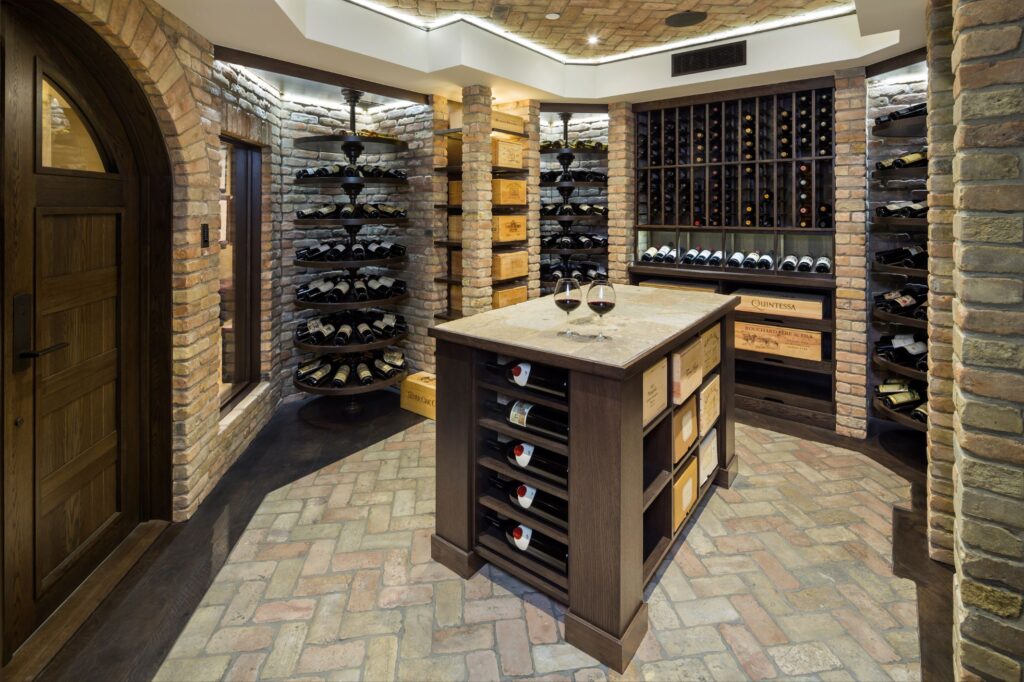
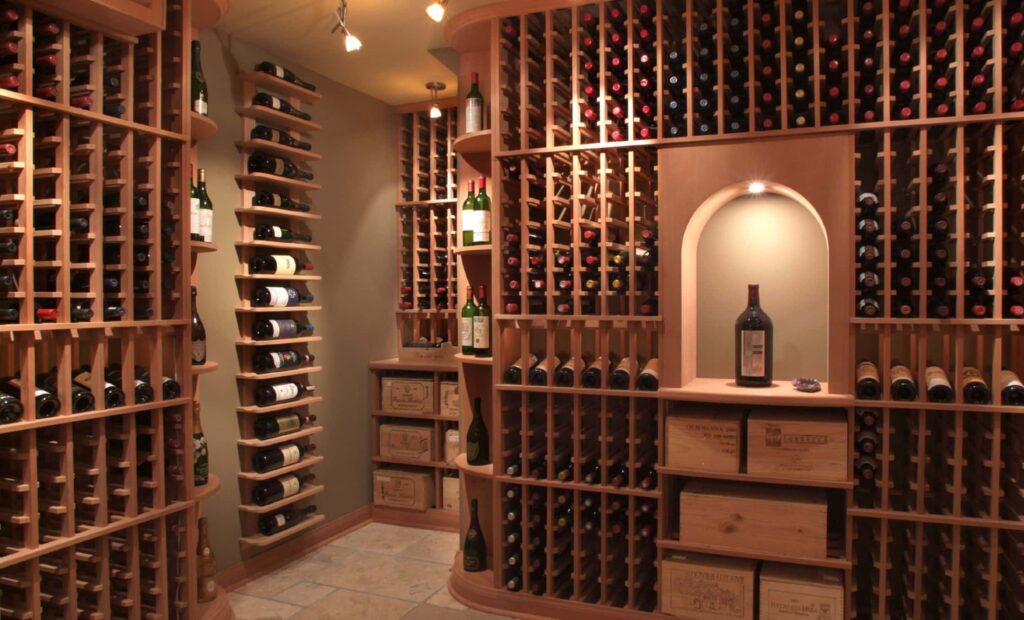
Premium woods, arched niches, diamond bins, and warm indirect light. The atmosphere is enveloping; the lines feel inevitable. This format excels at capacity and mixed-format logic. It also dampens temperature swings naturally when the envelope is disciplined.

Modern Wine Cellars

When the architecture is lean.
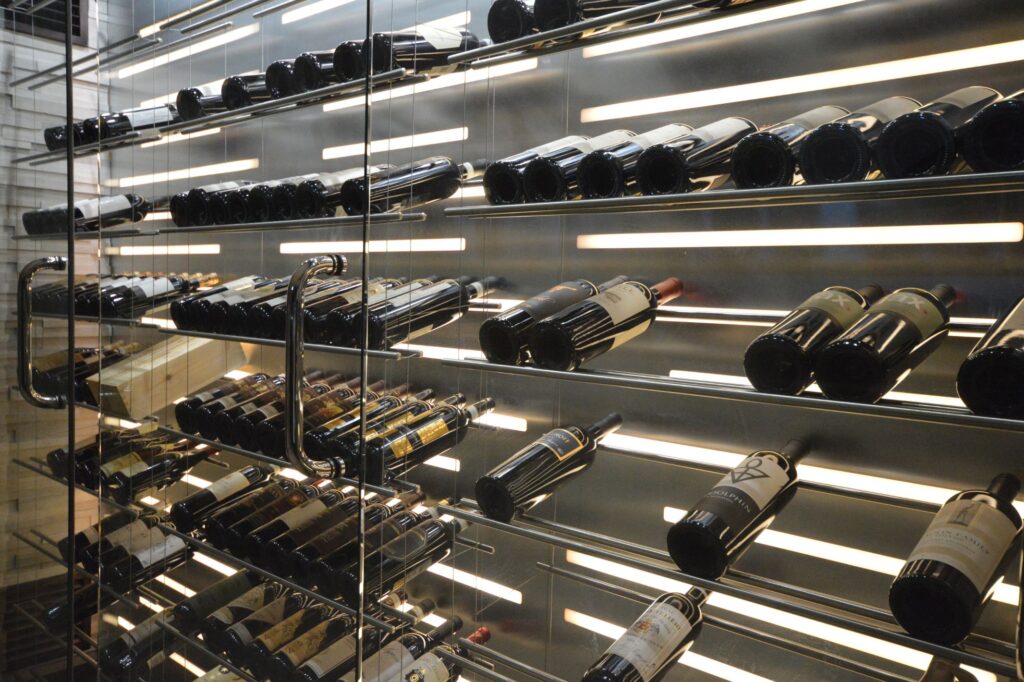
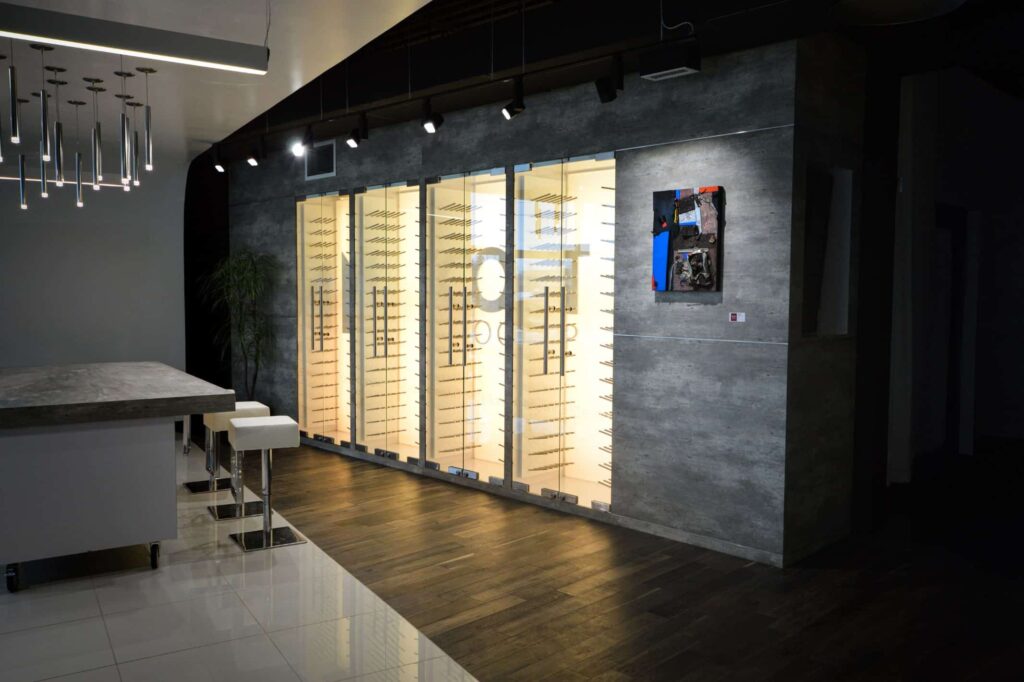
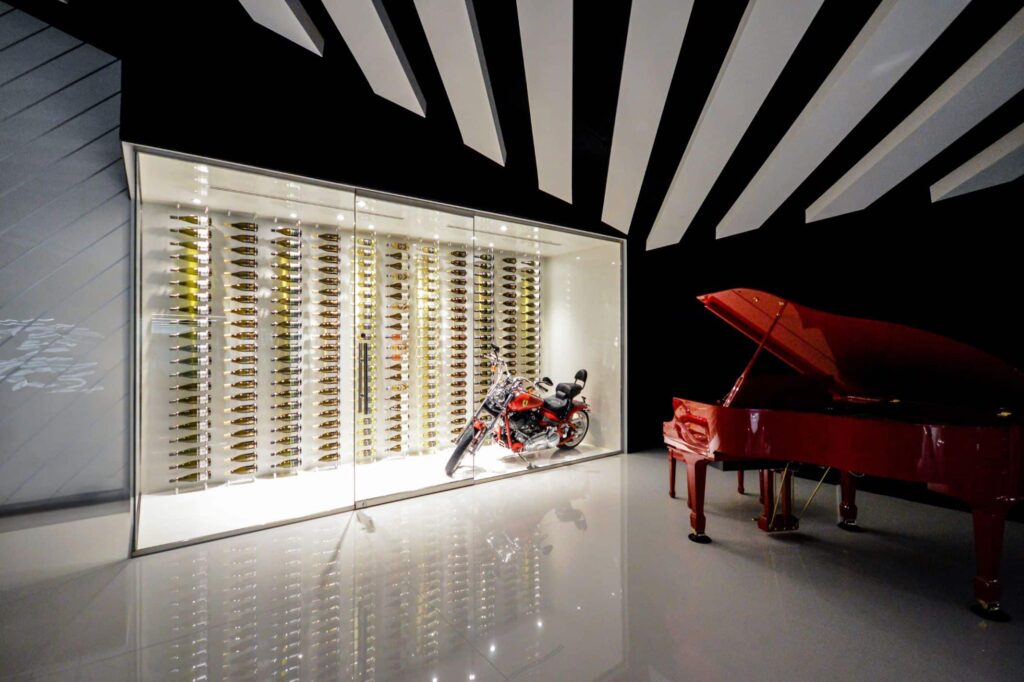
Glass and metal, label-forward displays, minimal lines that make the collection the artwork. It’s about quiet precision, negative space, perfect alignment, and luminous balance. Because glass conducts, pair the aesthetic with insulated framed assemblies and a cooling strategy sized for real life (sun, guests, lighting). Do that, and modern reads as serene rather than fragile.

Space-Efficient Builds

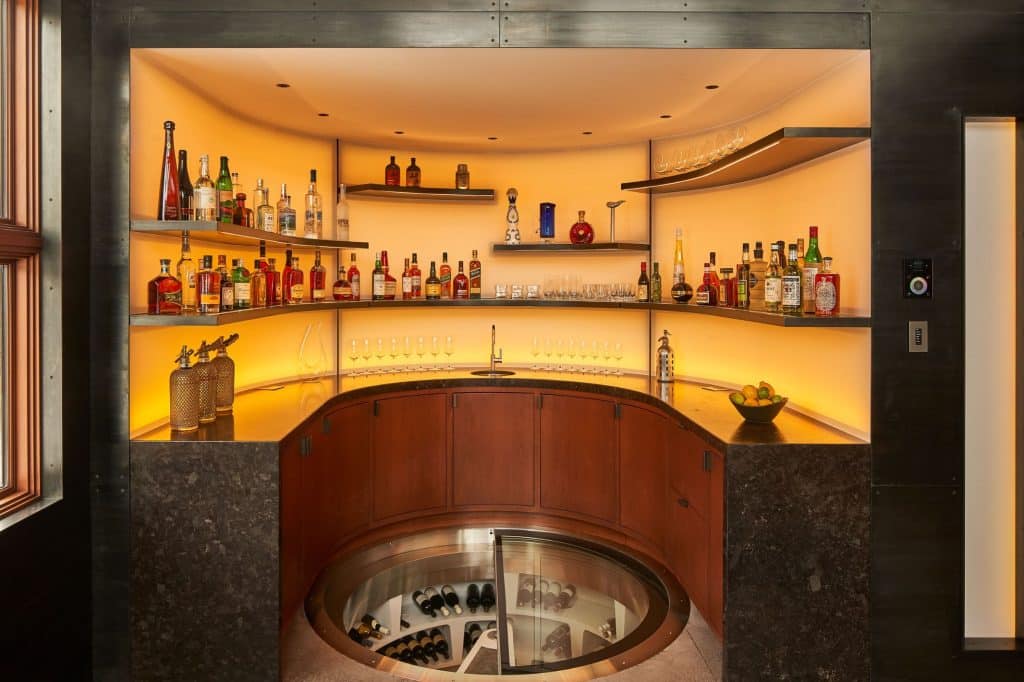
Excavated cylinders beneath a glazed or solid hatch. The surrounding mass buffers conditions; the vertical experience is cinematic.

wine cellar under stairs

Turned geometry into a feature with floating metal, cable systems, or tailored millwork.

Captivating Glass-Enclosed Wine Cellar Design - Genuwine Cellars

Feature walls

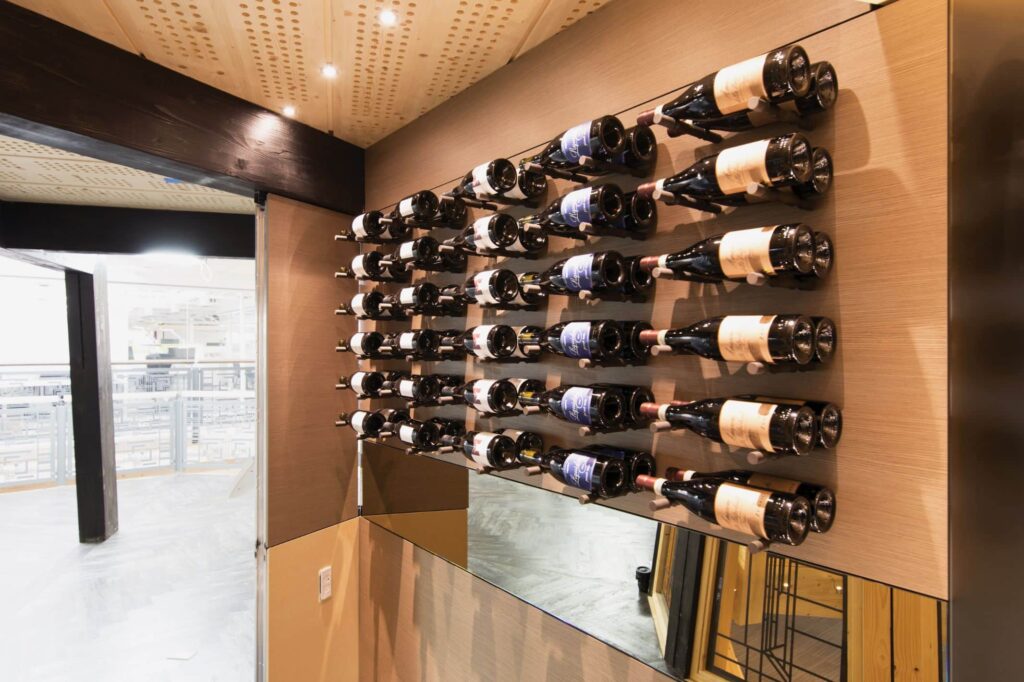
A curated display near the social core of the home, backed by reserve storage elsewhere.

wine wall with floating silver cable rings

Step 6: Plan For The Future

The best cellars anticipate change without looking like they’re braced for it.

Smart Tech & Automation

Smart Control Without Visual Noise
Use a controller that you can check from anywhere. Discreet sensors report temperature and humidity; alerts catch drift before it becomes damaged. Integrate lighting scenes so the room shifts with one command, not a wall of switches.

Growth & Flexibility

Create for what you drink now, and what you might fall in love with. Modular racking that converts between 750 ml and large formats saves heartbreak later. Leave discreet blanking panels for future lighting channels or a humidity module. If you think your collection will double, speak that truth.

Maintenance & Longevity

Maintenance You Don’t See
Make filter changes a one-handed job. Keep valves and unions accessible. Design condensate routes that are obvious and forgiving. Most “emergencies” in high-end rooms trace back to service access that looked clean on install day and became impossible the day something changed.

FAQs About Planning A Wine Cellar

How much space do I really need for a custom wine cellar?

Less than most people think. If you craft vertically and choose efficient racking, a compact footprint can serve a serious collection. Right-size to your current count, add comfortable headroom, and keep aisles generous enough that the room feels inviting.

Can I build a wine cellar if I don’t have a basement?

Yes. Main-floor glass rooms, under-stair creations, and converted closets all succeed when the envelope is disciplined and the cooling matches the real load. The location dictates the engineering, not whether a cellar is possible.

What’s the minimum budget to start a custom wine cellar?

Begin with a compact, conditioned room finished well rather than a larger room finished thinly. Put dollars into the envelope, door/glass package, and a cooling system you won’t outgrow. Those choices hold value.

Do I need a contractor, or can I DIY a wine cellar?

DIY can work for small, straightforward closets. If your plan includes insulated glass, ducted or split systems, or complex geometry, bring in pros who understand vapor control, dew point, and service access. You’re buying performance you can’t see.

What type of cooling system is best for a home with a wine cellar?

The one that complements your architecture and noise expectations. Self-contained is simple. Ducted moves equipment out of sight. Split delivers the quietest experience and cleanest lines, especially for glass-heavy rooms.

How do I make sure my wine cellar doesn’t get too humid or dry?

Aim for steady, moderate humidity. Start with an envelope that doesn’t leak, then select equipment that maintains balance for your climate. Verify with in-room sensors so you’re managing facts, not guesses.

How do I plan for future wine collection growth?

Blend display and density from the start. Choose racking that reconfigures, allocate a reserve wall for growth, and give the mechanical spec a little breathing room. Expansion should feel like a plan, not a patch.

How long does it take to plan and build a home wine cellar?

Light remodels move quickly. Fully bespoke rooms take longer because the best parts, custom millwork, insulated glazing, and engineered hardware, earn their lead times. Projects with decisions made in the right order move fastest.

From Planning To Building: Start Your Wine Cellar Journey

The rooms that feel effortless are the ones with rigorous planning hidden inside them. Begin with honest goals, pick the right location, invest in the envelope, and select systems that disappear into the architecture. Then choose a style that speaks your home’s language.

Read the Ultimate Guide to Custom Wine Cellars for deeper specs and sequencing, and contact our design team today.

Contact Us

"*" indicates required fields

Name*
Drop files here or
Max. file size: 50 MB, Max. files: 5.
    If there are any floor plans, or designs that inspire you, please attach them to this form.
    Where Did You First Hear About Us?*

    Subscribe for Exclusive Updates from Genuwine Cellars