

Climate Controlled Glass Wine Cellar Rooms
Your story, in every detail. At Genuwine Cellars, our approach to custom-designed glass wine cellars is shaped by each client’s vision and history. Our glass wine room designs celebrate beauty, memories, and the joy of shared moments. With refined sight lines, quiet performance, and meticulous detailing, the collection is displayed as a curated focal point, protected from temperature fluctuation, humidity variation, and UV exposure. With that level of intention, a Genuwine Cellar becomes an architectural feature as much as it is a preservation environment.


The Luxury Architecture of Glass Wine Rooms
Spaces that set the global standard for modern glass wine cellar design.


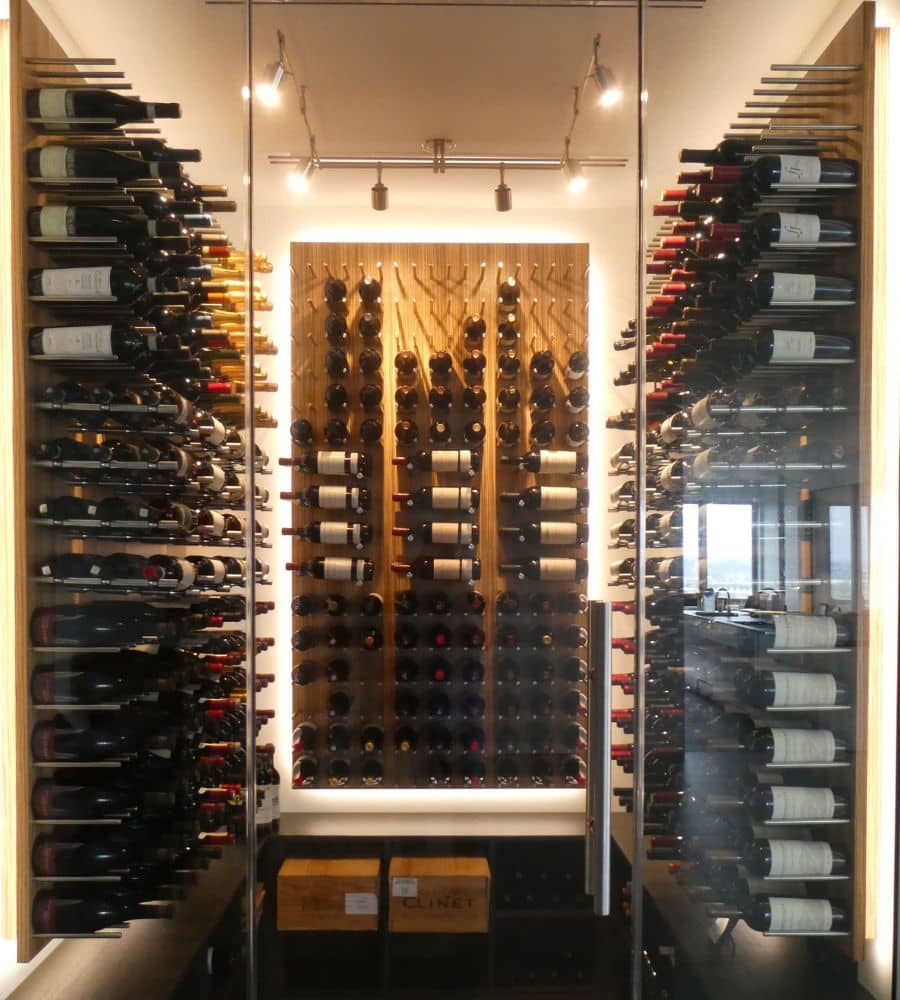


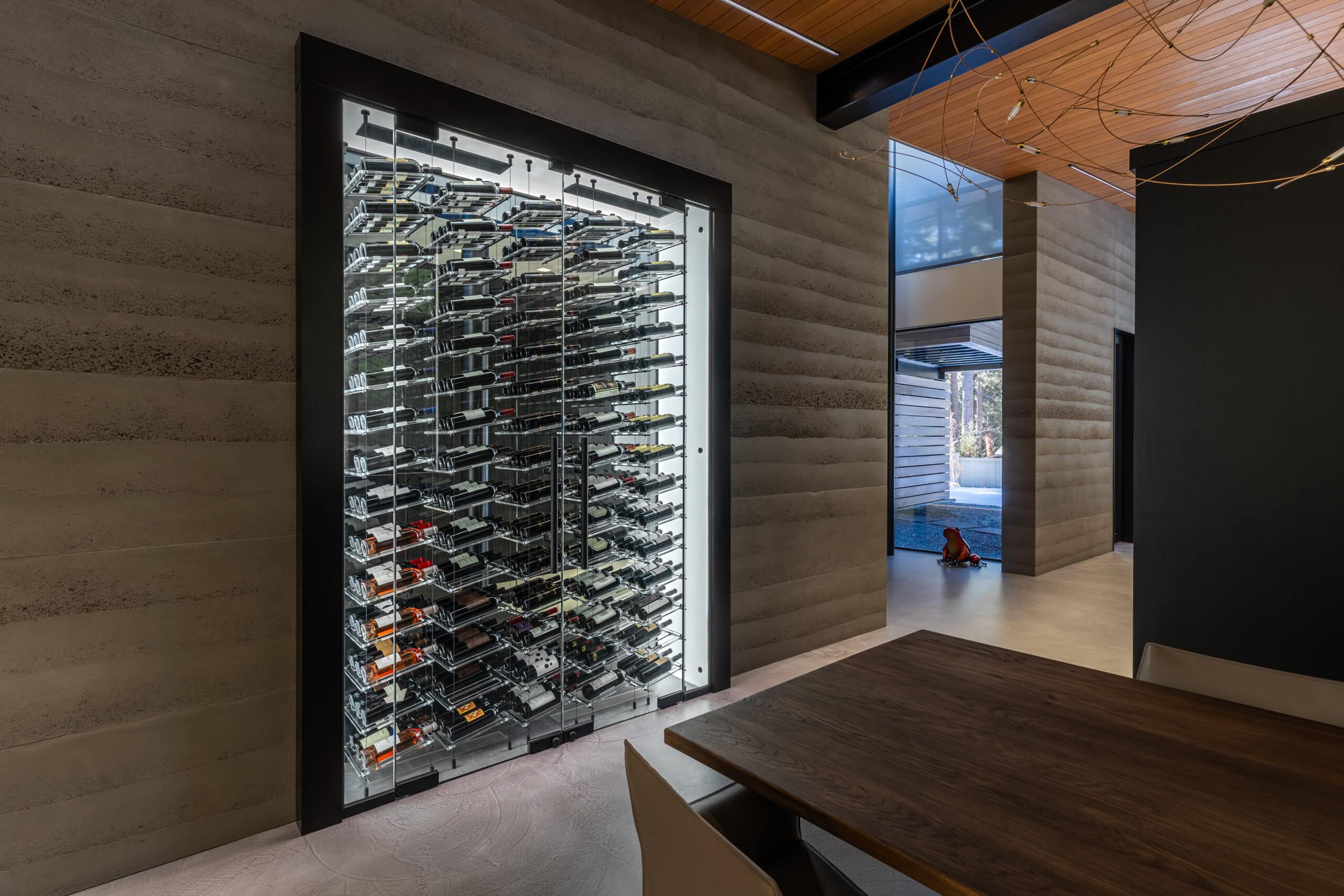

Glass Wine Rooms and Glass Wine Walls
Three terms get used for three different things, and the right one depends on the space. A glass wine cellar is a sealed, climate-controlled room you walk into, with thermal glass on one or more sides and cooling sized to the glass. A glass wine room is the same build in a living space rather than below grade: a dining room bay, a hallway enclosure, a corner of the great room, usually frameless, usually lit from within. A glass wine wall is not a room at all: a floor-to-ceiling display built into or against a wall, glass-fronted and cooled, holding the collection label-forward in a single plane.
Each is designed and built by Genuwine Cellars, in-house, as one team. If a wall is what the space calls for, our glass wine walls page shows the collections and the projects. Opus, Lumina and Label Link are the collections designed for glass rooms. More ideas are in our glass wine room design ideas guide.


Glass Wine Cellar Design Process
Building a custom glass wine cellar starts with an on-site consultation, where our designers assess your space, climate needs, and collection size. Next, our team produces detailed architectural drawings and 3D renderings, so every glass panel, hinge, and cooling unit is mapped before fabrication begins. Once designs are approved, our in-house craftsmen fabricate and pre-fit each glass wine cellar component for precision assembly. Finally, our white-glove installation team builds the cellar on-site, calibrates the climate control system, and walks you through care and maintenance, delivering a finished glass wine cellar ready to showcase your collection from day one.
How a Glass Wine Cellar Is Built
Structural glass versus thermal glass
A glass partition keeps a room looking open; it does not keep a cellar cold. Cellar glazing is insulated, usually dual-pane with a low-emissivity coating, specified for the temperature difference across it rather than for its appearance. Single-pane glass in a cooled room sweats, and the sweating is permanent.
The dew-point problem
Cool air on one side and warm, humid air on the other meet at the glass. Below the dew point, condensation forms on the warm face. The answer is engineered, not cosmetic: insulated units, thermally broken frames or frameless systems designed for cellar use, and a cooling set point that holds 55 to 58 degrees without driving the glass below the room’s dew point.
Frameless doors and seals
The door is where most glass cellars leak. Ours use full-height tempered or laminated glass on cellar-rated hardware with a continuous perimeter seal and a threshold that closes the gap at the floor, so the room holds its envelope with the door in daily use.
Cooling sized to the glass
Glass loses heat faster than an insulated wall, so the cooling load is calculated on glass area, orientation and the room beyond it, not on bottle count. Our climate engineering is in-house; the system is sized to that load, then concealed, ducted or split so the equipment is never part of the view.


Lighting & climate control
Lighting without heat
LED is the only choice inside a glass cellar, in a colour temperature that flatters wine and glass, placed so the source is hidden and the bottles carry the light. Every watt inside the envelope is heat the cooling has to remove, so the lighting is specified with the climate system, not after it.
The order of trades on site
Rough framing and the vapour barrier, electrical and refrigerant lines, the insulated envelope, racking, glazing and doors, then lighting and commissioning. Glass goes in late, after the dusty work, and the cellar is commissioned and held at temperature before the first bottle arrives. One team carries every stage, turnkey, under a lifetime craftsmanship warranty. See it built in the Curve Glass Wine Cellar in Nashville, The Gilded Reserve in Miami and the Ponte Vedra Estate.

Why Choose Genuwine for Glass Wine Cellars
Every glass wine cellar we build begins with structural engineering, not decoration; our team calculates load paths, seismic bracing, and thermal expansion before a single pane is cut. Museum-grade UV-filtering glass and archival-quality seals protect your collection the same way world-class galleries protect fine art. With three decades of hands-on fabrication experience, Genuwine has designed and installed glass wine cellars for private residences, restaurants, and corporate lobbies alike, scaling from a single showcase wall to a walk-in glass wine room. Every project is backed by in-house engineering, installation, and after-care, a single point of accountability from first sketch to final polish.

What a Glass Wine Cellar Costs
Glass cellars are priced on four drivers, and the glass is rarely the largest. Glass area and system: the more of the envelope that is glazed, the more insulated glass, hardware and sealing the room needs. Cooling: a glass room carries a heavier load than a walled one, and a concealed, ducted system costs more than a visible unit. Racking: a label-forward metal or cable system reads differently and costs differently from hardwood; the collection size and the display intent set this. Site conditions: an above-grade room in a warm climate, a third-floor condominium, or a room that needs structural glass all add engineering.
As a guide, custom wine cellars by Genuwine Cellars start at $60,000, and a glass room sits above a walled room of the same size because of the glazing and cooling. A design consultation with our specialists produces a proposal priced to your space; our custom wine cellar cost guide walks through the drivers in detail.
ENVISION YOUR WINE CELLAR
Your collection deserves a Genuwine Cellar built around it. Schedule a consultation with our cellar experts.
Frequently asked questions about glass wine cellars
Do Glass Wine Cellars Require A Vapor Barrier?
Yes, glass wine cellars require a vapor barrier to maintain optimal conditions for wine storage. The vapor barrier controls moisture levels, ensuring stable humidity and temperature, which are essential for preserving the quality of the wine and protecting the structural integrity of the cellar's materials. Our wine cellar expert will assist you at every stage of the project and advise you on the best solutions tailored to your specific needs.
How Much Does A Glass Wine Cellar Typically Cost?
A glass wine cellar is priced on four drivers: how much of the room is glazed, the cooling system, the racking, and site conditions. As a guide, custom wine cellars by Genuwine Cellars start at $60,000 and rise with your selection of materials and finishes, and a glass room sits above a walled room of the same size because of the glazing and cooling. Our custom wine cellar cost guide walks through each driver, and a design consultation produces a proposal priced to your space.
Can I Include A Window In The Wine Cellar Design?
When considering a light source near the wine cellar, it is crucial to approach it with caution. A wine cellar expert can create an ideal insulated environment by using special glass, proper insulation, and addressing temperature fluctuations, cooling, and humidity requirements to safely implement a window near or inside the cellar. Without adhering to strict guidelines, the conditions within the cellar can be compromised, leading to spoilage of the wine collection.
Is It Possible To Store Wine Without A Glass Enclosure?
Yes, it is possible to store wine without a glass enclosure, however, it is not recommended. Glass enclosures play a crucial role in shielding wine from harmful elements such as temperature swings, humidity fluctuations, and light exposure, all of which can deteriorate the wine's quality over time. By providing a stable and controlled environment, glass enclosures help preserve the wine's integrity and enhance its aging process.
What Is The Estimated Timeframe For Designing And Installing A Glass Wine Cellar?
The timeframe for designing and installing a glass wine cellar is primarily influenced by the project's complexity, including design intricacies, customization elements, and site preparation specifics. We are dedicated to providing a seamless and efficient experience, ensuring that your bespoke wine cellar is crafted and installed with the utmost precision and care. Our team is committed to aligning with your desired timeline, delivering an exquisite wine cellar that meets your highest expectations.
Do You Manage All Aspects Of The Installation, Including Electrical And HVAC Requirements?
Yes, we provide complete management of all installation aspects for wine cellars, including crucial electrical and HVAC requirements. Our wine cellar experts ensure that each installation is executed with meticulous attention to detail, adhering to the highest standards of luxury and efficiency. We handle every element from start to finish, guaranteeing a perfectly integrated wine cellar tailored to your specific needs and preferences.
How Thick Should Glass Be For A Wine Cellar?
Wine wall glass should be between 10 - 12 mm thick and should be Tempered Glass strengthened for maximum safety and sealed to avoid malfunction and condensation.
Why Should I Buy A Glass Wine Cellar Doors From Genuwine And Not My Local Supplier?
Choosing a glass door system for your wine cellar is a crucial decision. At Genuwine Cellars, we specialize in designing and building luxury wine cellars, providing you with a deep understanding of the specific needs and requirements of wine storage. We offer a wide range of wine cellar glass door options, including custom-built designs, tailored to your specific needs and preferences, allowing you to create a wine cellar that is truly unique and exclusive. Our glass door systems are made with high-quality materials, ensuring durability and longevity, backed by our warranty. Our team of experts will work closely with you to ensure the perfect fit for your wine cellar, home, and lifestyle. Let us help to provide you with a glass door system that looks elegant and preserves your wine collection perfectly.
What Is Tempered Glass?
Tempered glass is a type of safety glass that is treated with heat and pressure to make it stronger and more durable than regular glass. In the context of wine cellars, tempered glass is often used for the door systems as it is more resistant to impact and temperature changes, which can protect your wine collection from any damage. Additionally, tempered glass is also more resistant to scratches and stains, making it ideal for high traffic areas or places that need frequent cleaning. This type of glass is a perfect fit for wine cellars as it provides an elegant look while protecting your valuable wine collection.
Do I Need To Hire A Contractor To Install The Glass Wine Cellar?
It is highly advisable to engage a professional contractor for the installation of a glass wine cellar, ensuring the utmost precision and safety in its construction. At Genuwine Cellars, we handle the specifics of the installation, ensuring the structure can support the weight of the glass and the wine, managing temperature control systems, and sealing the enclosure properly to maintain the correct humidity levels. This approach helps prevent any issues and maximizes the longevity and functionality of your wine cellar.
What Temperature And Humidity Does A Glass Wine Cellar Maintain?
A properly engineered glass wine cellar holds a steady 55°F with 50-70% relative humidity, regardless of the glass surface area. Our climate systems are sized specifically for glass enclosures, using insulated glazing and sealed edges to prevent the temperature swings that unprotected glass would normally allow.
Does A Glass Wine Cellar Fog Up Or Develop Condensation?
No, when a glass wine cellar is designed correctly, the climate-controlled air stays fully sealed behind insulated glazing, low-E coatings, and precision-fitted door gaskets, so the exterior glass stays clear year-round. Condensation is almost always a sign of a gap in the vapor barrier or an undersized cooling unit, which is why we engineer every glass wine cellar as a single sealed system rather than adding glass to an existing room after the fact.
Should I Choose A Glass Wine Wall Or A Full Glass Walk-In Wine Cellar?
A glass wine wall is a striking, space-efficient way to display a curated portion of your collection along a single sightline, while a full glass wine cellar walk-in gives you a dedicated room you can enter, browse, and store a much larger collection in. Many clients start with a glass wine wall in a dining room or hallway and later expand into a full glass wine cellar as their collection grows; our designers can plan for that transition from day one.
Can A Glass Wine Cellar Work In A Small Space?
Yes, some of our most requested glass wine cellar designs fit under staircases, within closets, or along a single narrow wall, using slim-profile racking and space-saving cooling units built for compact footprints. A glass wine cellar actually reads larger than a solid-walled room of the same size, since the transparent walls keep the space visually open.
How Do I Maintain And Clean A Glass Wine Cellar?
Routine care for a glass wine cellar is simple: wipe the glass with a non-ammonia glass cleaner to protect any coatings, keep door seals free of debris, and have the climate control system serviced annually. Because every glass wine cellar we build uses tempered, coated glass and commercial-grade hardware, day-to-day upkeep is minimal compared to traditional cellar finishes.
Can a glass wine cellar be built without visible metal framing?
Yes. Frameless glass panels are possible using thicker tempered or laminated glass with precision-engineered seals and hardware, so the walls appear to float without visible metal frames. It costs more than a framed system, but it gives an unobstructed, all-glass look many collectors want.