

Wine Cellar or Wine Grotto
Walk through enough luxury homes and you will eventually hear both terms: wine cellar and wine grotto. They are sometimes used interchangeably, but they are not the same thing. The distinction matters, especially if you are designing a custom wine space for long-term storage, entertaining, or both.
At the highest level, a wine cellar is defined by function. It is a climate-controlled environment built to preserve and age wine properly. A wine grotto is defined by atmosphere. It is designed to evoke the feeling of a cave or old-world wine vault, often with a stronger emphasis on experience, mood, and entertaining.
In many luxury homes, the best results combine both. At Genuwine Cellars, we often help clients distinguish between a preservation-first wine cellar and a more immersive, cave-inspired wine environment so the final design supports both the collection and the way the space will be enjoyed.
What Is a Wine Cellar?
A wine cellar is a purpose-built storage environment designed for the long-term preservation and aging of wine. Its defining feature is precision climate control. A true wine cellar intended for collector-grade storage should maintain stable temperature, controlled humidity, low vibration, and protection from direct light.
In most custom applications, that means a cellar is engineered to hold conditions around 55°F, typically within a narrow range, with relative humidity between 60% and 70%. It also means the room is designed as an enclosure, not simply fitted with racks and bottles.
Wine cellars can be built in a wide range of locations, including basements, converted closets, dedicated rooms, and even beneath staircases. They can also take many forms, from traditional wood-lined spaces to contemporary glass-enclosed wine cellars, compact custom wine cabinets and wine closets, or a tailored under stairs wine cellar.
What makes them wine cellars is not the style. It is the performance.
Key characteristics of a wine cellar
- Climate-controlled storage for aging and preservation
- Stable temperature and humidity
- Insulation, vapor barrier, and sealed enclosure
- Racking systems designed to organize and protect bottles
- Flexible design language, from traditional to highly modern
- Functional priority: preserving the collection under optimal conditions

What Is a Wine Grotto?
A wine grotto is a wine space designed to evoke the character of a natural cave or underground cavern. The word grotto comes from the Italian grotta, meaning cave, and that idea defines the design language.
A wine grotto typically features natural stone, textured plaster, brick, arched openings, barrel or vaulted ceilings, and lower ambient lighting. The goal is to create a more immersive, atmospheric environment that feels rooted in old-world wine culture.
Historically, wine was stored in caves long before modern refrigeration and environmental controls existed. Underground conditions naturally offered darkness, cooler temperatures, and relative humidity. Today, the wine grotto is a deliberate design callback to that tradition, but in a luxury residential setting.
Unlike a wine cellar, a wine grotto is not defined first by climate engineering. It is defined first by experience.
Key characteristics of a wine grotto
- Cave-inspired or old-world design aesthetic
- Natural or rustic material palette
- Arched entries and organic architectural forms
- Low, ambient lighting
- Often includes seating, tasting areas, or entertaining space
- Experiential priority: atmosphere, hospitality, and immersion
Wine Cellar vs. Wine Grotto: The Key Differences
The terms overlap, which is why they are often confused. A wine grotto can absolutely function as a wine cellar if it is properly engineered. A wine cellar can also incorporate grotto-inspired materials and detailing. The real distinction comes down to design intent.
| Feature | Wine Cellar | Wine Grotto |
|---|---|---|
| Primary purpose | Preservation and aging | Atmosphere, tasting, and entertaining |
| Defining trait | Climate-controlled function | Cave-like design experience |
| Climate control | Essential for long-term storage | Optional aesthetically, but necessary if storing wine seriously |
| Design language | Flexible: modern, traditional, transitional | Cave-inspired, rustic, old-world |
| Typical location | Anywhere in the home | Most often below grade |
| Scale | Compact to expansive | Usually medium to large |
| Best for | Serious collectors | Collectors who want an immersive wine experience |
Design language
A wine cellar can take almost any visual form. It may be a sleek, minimalist display with metal wine walls, a warm all-wood room with custom millwork, or a contemporary installation with glass and architectural lighting.
A wine grotto has a much narrower visual identity. It is intentionally cave-like, with rougher textures, more dramatic materiality, and a moodier atmosphere.
Purpose
A wine cellar is typically built for one core reason: to protect a collection and allow it to age properly.
A wine grotto is usually built to create an experience. It is a destination within the home, often designed for tasting, conversation, and entertaining as much as storage.
Climate control
A true wine cellar intended for long-term storage should include engineered climate control. That includes the cooling unit, insulation strategy, vapor barrier, sealing, and heat-load planning needed to create thermal stability.
A wine grotto may or may not include that same level of engineering. Some rely too heavily on the assumption that a basement or stone-lined room is naturally suitable for wine. It is not. Without proper climate control, a grotto may be visually compelling, but it is not necessarily protecting the collection.
Location
Wine cellars can be built nearly anywhere in the home if the enclosure is designed correctly.
Wine grottos are most often created in below-grade spaces, where the cave-like atmosphere feels authentic and the architecture can support a more immersive environment.
Scale and experience
A wine cellar can be as compact as a small closet conversion or as expansive as a full walk-in room.
A wine grotto tends to be larger, more dramatic, and more hospitality-oriented. It often includes a tasting table, lounge seating, or an adjoining entertaining zone.
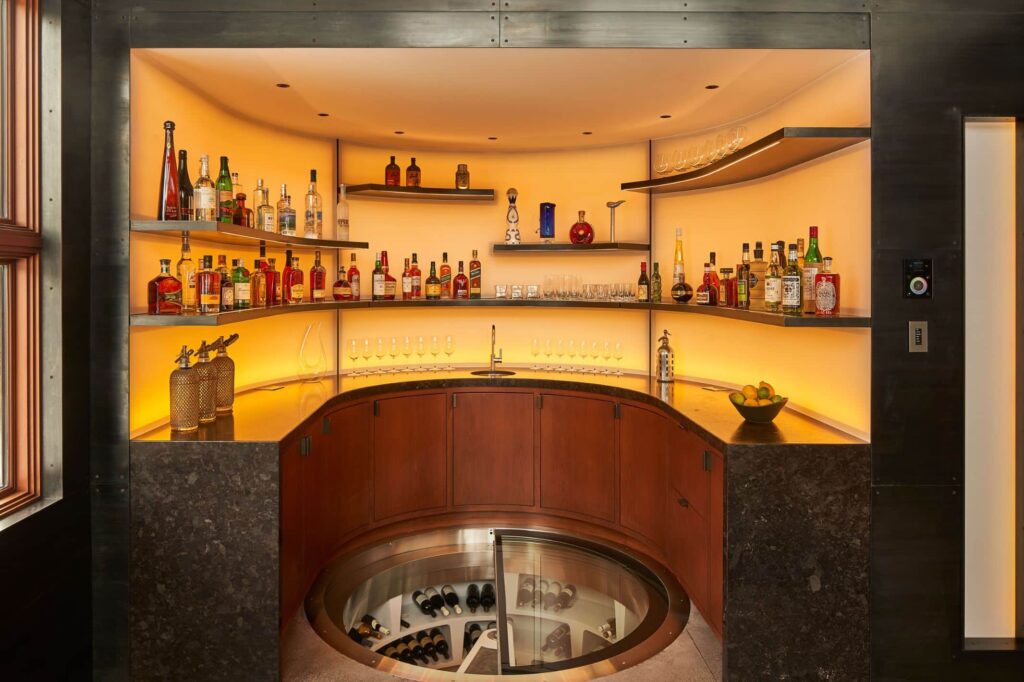
Can a Wine Grotto Also Be a Wine Cellar?
Yes. In fact, the best wine grottos usually are.
A cave-inspired design does not prevent a space from functioning as a high-performance wine cellar. When a grotto is properly insulated, sealed, and climate controlled, it can store and age wine just as effectively as any other custom cellar.
This is where luxury design becomes most compelling. A wine grotto can deliver the atmosphere of an old-world vault while still providing the precision environmental control serious collectors need. In many cases, that hybrid approach gives homeowners the best of both worlds: experiential design and technical performance.
Why Climate Control Matters in Both
Whether a room looks modern, traditional, or cave-inspired, wine storage is still governed by the same preservation principles.
Stable temperature matters because fluctuations can accelerate aging and stress the wine. Humidity matters because overly dry conditions can compromise cork integrity, while excessive moisture can create problems for the enclosure and finishes. Light, vibration, and poor air sealing can also undermine storage quality over time.
That is why a properly built custom wine room is never just about racking. It is about the full cellar envelope: insulation, vapor barrier placement, thermal separation, cooling strategy, and how the room interacts with the surrounding home.
This is especially important in luxury residences where the visual design may distract from the technical reality. A stone wall, arched ceiling, or dramatic door does not make a room a functional wine cellar on its own. Preservation still depends on engineering.
Common Misconceptions About Wine Grottos and Wine Cellars
One of the biggest misconceptions is that a basement is automatically suitable for wine storage. While below-grade spaces may be cooler than the rest of the home, they are rarely stable enough on their own for proper long-term aging.
Another misconception is that a cave-like room is automatically a wine grotto that protects wine. It may look the part, but without climate control and enclosure planning, it is still just a beautifully styled room.
It is also a mistake to think that all wine cellars need to look traditional. Modern custom wine cellar design can be highly architectural, with clean lines, frameless glass, floating bottle presentation, and integrated lighting.
And finally, many homeowners underestimate what is possible in smaller footprints. A compact room, closet, or under-stair volume can still become a true climate-controlled cellar when designed properly.
Which One Is Right for Your Home?
Build a wine cellar if your main priority is long-term preservation, collector organization, and flexibility in style. A cellar is the right answer when storage performance comes first and the design language may range from highly traditional to fully contemporary.
Build a wine grotto if you want a destination. A grotto is ideal when the emotional experience of wine matters as much as the collection itself, and when the home has a below-grade space that can support a more immersive transformation.
For many luxury homes, the right answer is not strictly one or the other. It is a custom design that combines the strengths of both. Some projects integrate cave-inspired materials into a fully climate-controlled cellar. Others separate the functions, pairing a sealed storage room with an adjacent tasting or entertaining space.
The best choice depends on how you collect, how you entertain, and how prominently the wine environment should live within the architecture of the home.
Designing a Wine Cellar or Wine Grotto with Genuwine Cellars
At Genuwine Cellars, we design custom wine environments that balance architectural impact with true storage performance. For some clients, that means a preservation-first cellar with exacting climate control and bespoke racking. For others, it means a more immersive wine grotto with dramatic materials, mood-driven lighting, and tasting-focused design.
In many cases, the strongest solution blends both approaches. A climate-controlled wine room can still feel atmospheric. A cave-inspired grotto can still be engineered for serious aging. The goal is not to force the space into a category. It is to design the right environment for the collection, the home, and the experience you want to create.
Explore our custom wine cellars or contact us to discuss your project.
Begin Your Masterpiece
Tell us about your collection and the room, and our wine cellar specialists will take it from there.
Frequently Asked Questions About
Custom Wine Cellars and Wine Grottos
What is a wine grotto?
A wine grotto is a cave-inspired wine room designed to create a more immersive, old-world atmosphere. It often features stone, brick, arched forms, and low lighting, with a stronger focus on experience and entertaining than a standard storage room.
Is a wine grotto the same as a wine cellar?
Not exactly. A wine cellar is defined by climate-controlled storage and preservation, while a wine grotto is defined by its cave-like aesthetic and experiential character. A wine grotto can also function as a wine cellar if it is properly engineered for storage.
Can a wine grotto be climate controlled?
Yes. In fact, it should be if it is intended for serious wine storage. A wine grotto can absolutely include the same cooling, insulation, sealing, and humidity management as any other custom wine cellar.
Which is better for long-term storage: a wine cellar or a wine grotto?
A properly engineered wine cellar is the benchmark for long-term storage. A wine grotto can perform equally well if it includes the same climate control and enclosure strategy. The deciding factor is not the style, but whether the room is built to preserve wine correctly.
Can you build a wine grotto in a basement?
Yes. Basements are often the most natural location for a wine grotto because they support the below-grade, cave-like feel the design is meant to evoke. That said, the space still needs proper climate engineering if it will be used for long-term storage.
Does a wine cellar have to look traditional?
No. A custom wine cellar can be designed in a wide range of styles, from classic wood interiors to modern glass rooms, floating bottle displays, and architectural feature walls. What defines it is performance, not a particular visual style.

Robb Denomme is the founder and CEO of Genuwine Cellars, North America’s leading designer and manufacturer of custom wine cellars for luxury residences, hotels, and commercial spaces. His entrepreneurial journey began at just 17, when he and his business partner launched their first wine cellar venture. Combining early construction experience with a deep appreciation for fine craftsmanship, Robb transformed a small local operation into a global enterprise serving elite clients across North America.
Under his leadership, Genuwine Cellars has become synonymous with luxury architecture, design excellence, artisanal precision, and innovation in climate-controlled wine storage. Over three decades, the company has pioneered bespoke cellar systems, integrated digital monitoring solutions, and cutting-edge materials that redefine the modern wine environment. Genuwine’s work now features in some of the world’s most exclusive homes, restaurants, and hospitality properties.
Robb continues to lead Genuwine’s vision for innovation and artisanal craftsmanship, shaping the industry’s standards for both technical performance, luxury, and aesthetic design. As a recognized authority on luxury cellar construction, Robb contributes insights on design trends, architectural integration, and advanced storage technologies.
Credentials & Experience
30+ years in luxury wine cellar design and manufacturing
Founder and CEO, Genuwine Cellars (est. 1995)
Featured in BDC’s Young Entrepreneur Awards and multiple national business publications
Collaborator with architects, builders, and designers across high-end residential and commercial sectors