

Florida is one of the least forgiving places in the country for casual wine storage. Heat lingers for much of the year, humidity stays elevated, storms can interrupt cooling, and normal household conditions often shift more than collectors realize. That combination matters because wine does not respond well to instability. High heat can accelerate aging, repeated temperature swings can stress the seal, and excess moisture can damage labels, adhesives, and even the room itself if the storage environment is not built correctly. 

Standard wine advice is often not enough in Florida. Wine Guardian’s humid-climate guidance likewise notes that wine displays and cellars in humid regions must maintain controlled conditions, with 50% to 70% relative humidity and about 60% as the ideal target.

That is the key distinction. In a milder climate, a cool interior closet might work for everyday bottles. In Florida, the same setup can become risky because the house is constantly fighting outside moisture and heat. Genuwine’s own storage guidance emphasizes that the best place for a collection is a climate-controlled environment such as a wine cellar or temperature-controlled wine cabinet, not a convenient corner of the home.

Why Florida’s Heat And Humidity Make Wine Storage Different

Florida’s climate creates two overlapping threats. The first is temperature stress. Genuwine’s guidance on wine cellaring temperatures explains that while experts debate the perfect number, the accepted storage range is narrow, and consistency matters more than chasing an exact setpoint. Its general principles page says wine can be stored satisfactorily between 45°F and 64°F, with 55°F often treated as the ideal for long-term aging.

The second threat is humidity. Too little humidity can dry natural corks over time; too much can encourage mold, loosen labels, and degrade adhesives. Wine Guardian states that about 60% relative humidity is ideal, with 50% to 70% acceptable, and notes that levels over 70% can lead to mold and glue breakdown. In a Florida home, where the outside air is already moisture-heavy for much of the year, the issue is rarely abstract. Moisture is always trying to move into cooler, conditioned spaces.

This is why wine stored in a kitchen, laundry room, garage, or decorative nook near an exterior wall often fares worse in Florida than owners expect. Those locations may feel stable enough for people, but wine needs a calmer environment than people do. Even modest daily fluctuation can undermine aging potential over time.

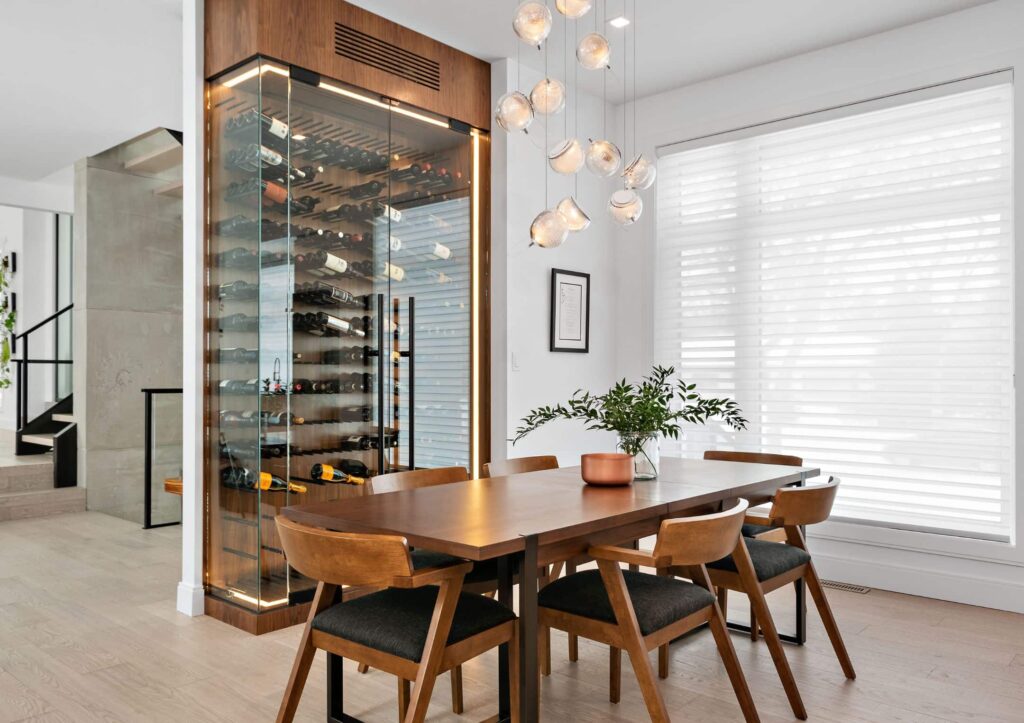
wine-cabinet-Miami-Genuwine-Cellars.jpg

The Ideal Conditions For Storing And Aging Wine At Home

The best home wine storage environment is cool, dark, stable, and minimally disturbed. Across the expert guidance, the benchmarks are consistent: A steady temperature around 55°F to 60°F, relative humidity in the 50% to 70% range, darkness or controlled lighting, very low vibration, and proper bottle orientation for cork-finished wines. Genuwine’s cellaring pages emphasize the same idea repeatedly: Consistency matters more than perfection.

That last point is important. There is a difference between storing wine for short-term drinking and aging wine for years. If a bottle will be opened in the near future, a quality wine cabinet or properly configured wine fridge may be enough. If the goal is true aging, where the wine develops gradually over time, the environment needs to stay remarkably stable. The room or cabinet should not drift with the weather, household routines, or seasonal HVAC changes. Genuwine’s article on the best way to store and age wine explicitly recommends a climate-controlled place such as a wine cellar or temperature-controlled cabinet for that reason.

Bottle position also depends on closure type. For most still wines sealed with natural cork, side storage helps keep the cork in contact with the wine and reduces the risk of drying. That remains the practical default for long-term aging. Humidity then supports the system by helping protect the cork and the seal around it.

How To Protect Wine From Humidity, Temperature Swings, Light, And Vibration

In Florida, protecting wine starts with controlling the envelope, not just cooling the air. A good setup manages temperature and humidity together. If humidity is too high, you may need dehumidification or better room sealing. If it is too low, humidification may be necessary, especially in mechanically cooled spaces. Wine Guardian’s guidance makes clear that the target is balance, not maximum moisture.

Insulation and vapor control are also critical. Genuwine’s recent cellar planning and design guidance explains that continuous insulation, a vapor barrier on the warm side, and sealed penetrations help keep the cooling system efficient and the room stable. Its newer article on custom wine storage adds that misplaced vapor barriers can trap moisture and damage assemblies, which is especially relevant in humid climates.

Light is another avoidable risk. Strong light, especially UV-heavy light, can accelerate premature aging and affect delicate wines. That does not mean a Florida wine room must be gloomy, but it does mean glazing, display lighting, and placement should be carefully considered. Genuwine’s guidance on glass wine rooms notes that if the design is off, you can end up fighting condensation, uneven temperatures, and wine that ages too fast.

Vibration deserves more attention than it gets. Wine benefits from being left alone. Constant motion from nearby laundry equipment, mechanical rooms, slamming doors, or unstable shelving can interfere with long-term settling. The safest storage areas are quiet, protected, and not tied to high-traffic household functions. Genuwine’s core guidance sums it up well: Wine rewards calm, with steady temperature, gentle humidity, low light, and no unnecessary disturbance.

Choosing The Best Wine Storage Solution In Florida

For casual drinkers, a passive closet may seem appealing. It is inexpensive and simple. In Florida, though, passive storage is only suitable when the space is unusually stable, and the bottles are not intended for long aging. Most closets in most homes will still experience seasonal warmth, HVAC cycling, and some degree of moisture movement. That makes them a weak choice for serious collections.

A wine refrigerator or wine cabinet is often the best next step. Genuwine’s storage article recommends a temperature-controlled wine cabinet as one of the best options when a full cellar is not practical. A well-made cabinet can protect everyday bottles and smaller collections far better than a pantry, kitchen rack, or standard refrigerator.

A custom wine cellar is the strongest long-term option for Florida homeowners who want to age wine with confidence. It allows the insulation, vapor barrier, cooling, bottle layout, lighting, and aesthetics to work together as a system. Genuwine’s more recent planning and design pieces repeatedly frame the cellar as an engineered environment, not simply a room with racks. That distinction matters most in humid climates.

For businesses, restaurants, and larger-scale collections, professionally designed commercial wine cellars for optimal storage offer the highest level of control and capacity. For homeowners comparing options, Genuwine’s internal resources on the best way to store and age your wine, the general principles of wine cellaring, and wine cellaring temperatures provide a solid baseline before moving into a custom build.

spiral wine cellar florida - Genuwine Cellars

Common Wine Storage Mistakes Florida Collectors Should Avoid

The most common mistake is storing wine in the wrong room. Kitchens, garages, laundry rooms, and spaces near exterior walls or windows are all vulnerable to heat, light, and fluctuation. In Florida, that risk is amplified by the outdoor climate and the constant load placed on household cooling systems.

The second mistake is relying on a standard refrigerator. A kitchen fridge is too cold, too dry, and constantly disturbed by opening and closing. It is suitable for short-term chilling before service, not long-term aging. Genuwine’s own guidance instead points people toward wine cabinets, wine walls that meet storage requirements, or full climate-controlled cellars.

The third mistake is ignoring seasonality. Florida homes do not behave the same way in August as they do in January. Storms, outages, humidity surges, and HVAC changes all affect storage performance. What seemed acceptable in one season can quietly become damaging in another.

The fourth mistake is overpacking racks and buying age-worthy wine without a real plan. Collectors often accumulate faster than they build capacity, which leads to overflow storage in less protected spaces. Once that happens, the collection is only as safe as the worst room in the house. Genuwine’s portfolio-driven presentation of the art of wine storage makes the broader point well: Good storage is deliberate, not improvised.

For more general reading, Genuwine’s wine storage tips are a useful internal companion to this topic.

Can wine be stored in a garage in Florida?

Not for long-term storage or aging. Florida garages are typically too hot and too unstable, with large daily and seasonal swings that can quickly stress wine.


What humidity level is best for aging wine?

About 60% relative humidity is generally considered ideal, with 50% to 70% accepted as the workable range for cellar storage.

Is a regular refrigerator good for long-term wine storage?

No. A standard kitchen refrigerator is too cold, too dry, and too frequently opened for proper long-term storage. A wine cabinet, wine fridge, or cellar is the better option.

Should wine bottles always be stored on their side?

Usually, yes, for still wines with natural cork closures. Side storage helps keep the cork from drying out during long aging.

How long can wine last if it is stored at the wrong temperature?

There is no single timeline because the outcome depends on how hot it gets, how often it swings, and the style of wine. But repeated exposure to poor temperatures can accelerate aging and shorten the wine’s useful life significantly.

Do I need a wine cellar or will a wine cabinet work?

A wine cabinet can work very well for smaller collections and near to medium-term storage. A custom cellar becomes the better choice when capacity, aging goals, and environmental control requirements increase.

What types of wine are worth aging in Florida storage conditions?

Only wines with proven aging potential are worth holding long term, and in Florida, that is only sensible if the storage conditions are stable. Fine wine cannot outperform a poor environment.

Protect Your Collection With Genuwine

In Florida, wine storage is not just about finding a cooler room. It is about building a controlled environment that can stand up to heat, humidity, and the realities of the local climate. Genuwine’s recent guidance consistently returns to the same idea: Protect the collection with steady temperature, balanced humidity, careful envelope detailing, and systems designed for the room rather than guessed at from appearance alone.

For homeowners who are ready to move beyond improvised storage, Genuwine offers custom wine cellar design, climate-control planning, and tailored storage solutions built for long-term performance in demanding environments.