

Basement Wine Cellar Ideas, From Rustic to Glass

A basement wine cellar starts with three advantages no other room in the house has: the ground holds its temperature, daylight never reaches it, and there is usually more floor than the rest of the home can spare. Those are the conditions wine wants, which is why the basement has been the natural home of the custom wine cellar for as long as houses have had one.

This guide collects the basement wine cellar ideas we design most often, from rustic rooms in reclaimed wood to glass-walled cellars off a finished lounge, so you can see what each one asks of the space before you fall for a photograph. Every idea is shown as we would build it: to hold a collection properly, and to look like it belongs to the house.

If you are still deciding whether to build below grade at all, our underground basement wine cellar guide covers the construction side. This page is about the design.

wine-cellar-in-basement-Genuwine-Cellars.jpg

Twelve Basement Wine Cellar Ideas

Twelve directions that work in real basements. Each one lists who it suits and the design move that makes it succeed, with links to the collections we build it from.

1. The Rustic Reclaimed-Wood Cellar

Reclaimed timber racking, a stone or brick accent wall and warm, low lighting give a basement the feel of an old-world cave. It suits homes with a traditional or farmhouse character, and collectors who want the cellar to feel like a destination rather than a display.

The move: keep the palette to two materials and let the bottles supply the colour. Our Sommelier Select racking in a rough-sawn finish carries the look while holding a serious collection.

rustic-wine-cellar-Genuwine-Cellars.jpg

2. The Traditional Cellar With Modular Racking

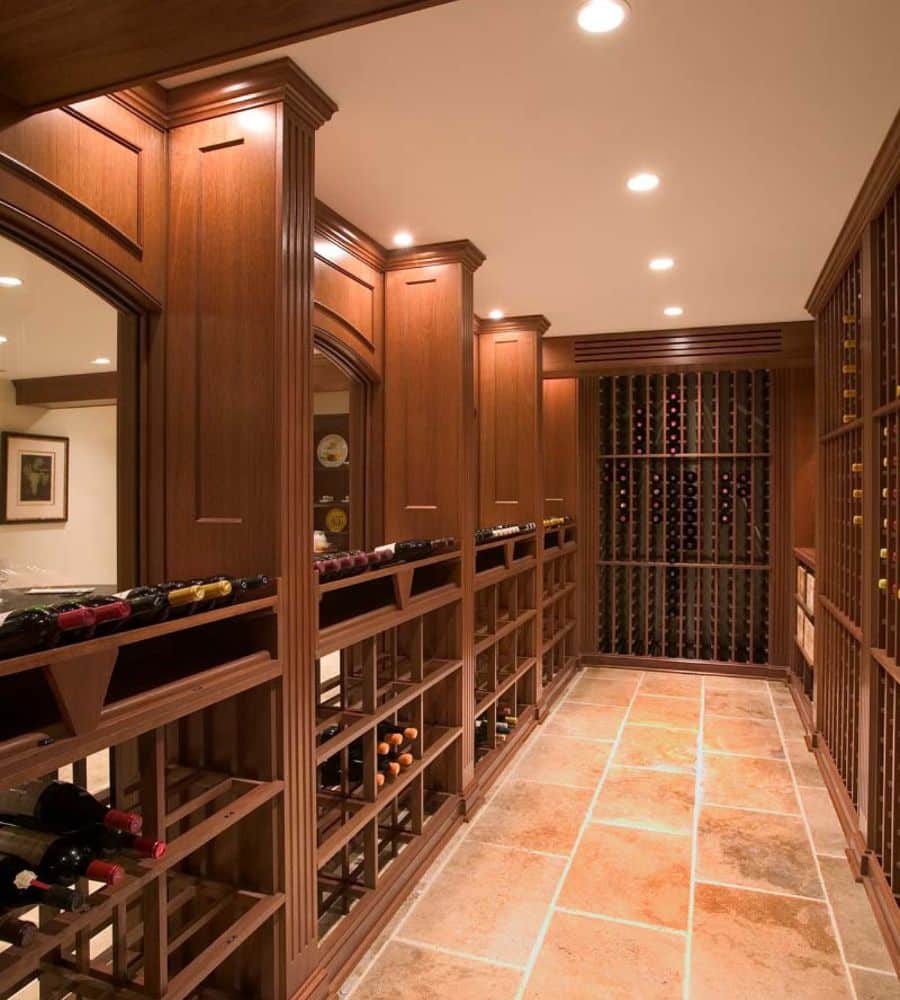
Floor-to-ceiling wood racking in a considered species, individual bottle slots, a display row at eye level and diamond bins for bulk. It is the classic traditional wine cellar, and the most capacity per square foot of any idea on this list.

The move: modular racking that mixes formats, so magnums, splits and cases all have a place, and the room reads as one piece of joinery rather than a run of shelves.

traditional-wine-cellars-los-angeles-Genuwine-Cellars.jpg

3. The Modern Cellar With Glass Walls

A conditioned room behind a wall of insulated glass, with metal or cable racking that keeps the view open. It suits a finished basement where the cellar faces a lounge, bar or theatre and becomes the room’s feature.

The move: label-forward racking such as Label Link or Lumina on cable, so every bottle faces the glass. Our glass wine cellar page covers the glass and door specification.

4. The Cellar With a Tasting Room

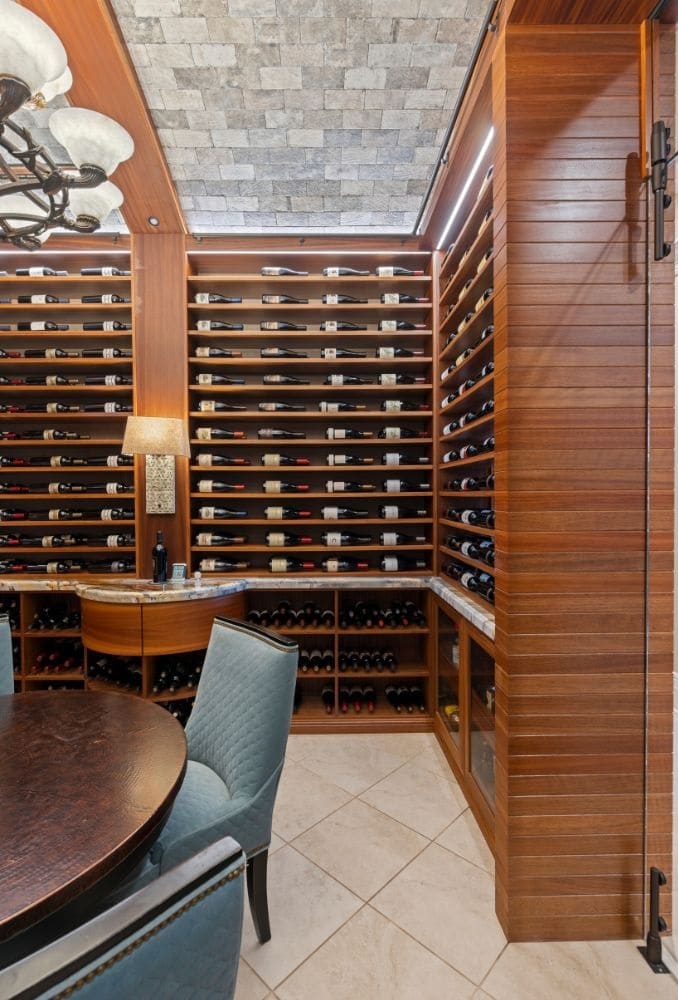
Two rooms with one purpose: a cold cellar for the collection and a comfortable room beside it for opening bottles. The tasting room takes the seating, the lighting and the temperature people prefer, so the cellar can stay at storage conditions.

The move: a glass wall or door between the two, so the collection is the backdrop to every tasting. A tasting table inside the cellar works only for short visits; the split is what makes it a room you use.

wine cellar with tasting table - Genuwine Cellars

5. The Label-Forward Display Wall

One wall of the basement given to a custom wine wall, with the bottles presented label out like a gallery. It suits collections in the low hundreds where every bottle earns its place, and basements that are more lounge than storeroom.

The move: The PEG System or Label Link mounted on a dark backing, lit from above, with bulk storage hidden elsewhere.

6. The Under-Stairs Cellar

The void beneath the basement stairs is dead space in most homes and a natural cellar in ours. A glass door across the opening, a small cooling unit and racking that follows the slope turns it into a jewel box.

The move: Label Ladder or the PEG System, which step down with the ceiling. Our under stairs wine cellar guide covers the layouts.

Under Stairs Wine Cellar Transformation - Genuwine Cellars

7. The Basement Bar and Wine Cellar

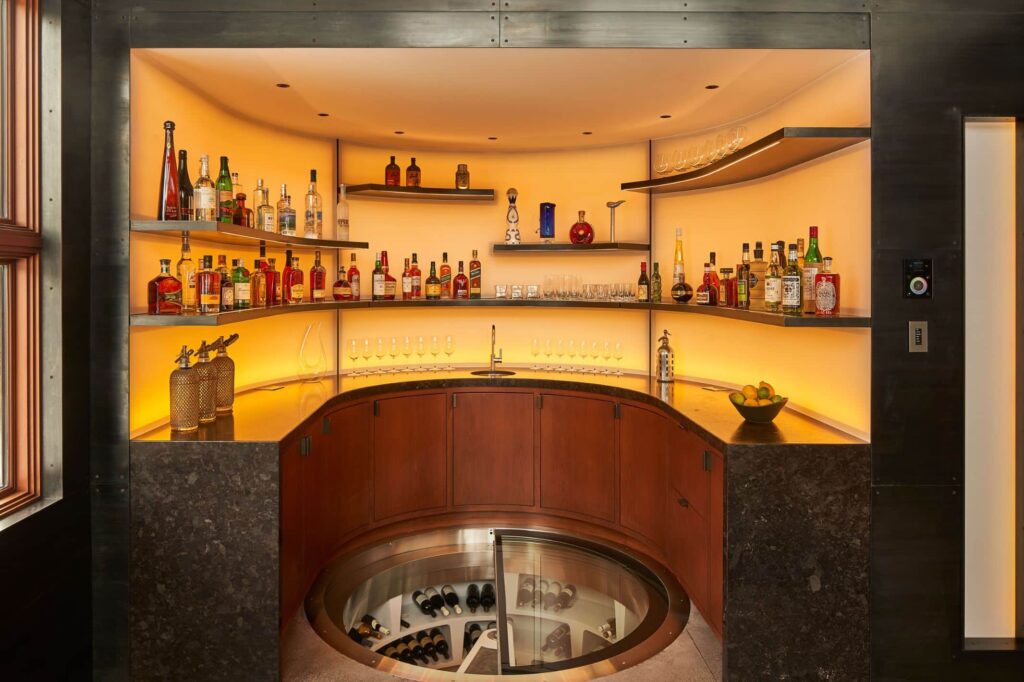
The cellar sits behind the bar, visible through glass, with the bar itself holding the working bottles and glassware. It is the idea most requested for entertaining basements, because the collection is part of the room without guests walking into the cold.

The move: a pass-through or a glass door beside the bar, and a back bar that matches the racking finish so the two read as one design.

wine room with bar and game tables - Genuwine Cellars

8. The Cellar Off the Theatre or Lounge

A glass-fronted cellar that opens directly onto the media room or lounge. The bottles glow behind the seating and the cellar becomes the wall art.

The move: dimmable, cool LED lighting on a scene control, so the cellar can drop to a soft glow during a film and come up when the bottle comes out. Keep the compressor away from the theatre wall.

9. The Small Basement Wine Cellar

A closet, a pantry or a corner of the utility room converted with a sealed door, a small cooling unit and high-density racking. It holds a few hundred bottles properly and costs a fraction of a full room.

The move: go vertical and label-forward, so the space reads as a cellar rather than a cupboard. Our wine closets page shows the formats.

modern-wine-closet-Genuwine-Cellars.jpg

10. The Glass-Door Cellar in a Finished Basement

A solid-walled cellar with one insulated glass door on the finished side. It gives the visibility of a glass room at the cost of a single door, and suits basements where the cellar shares a wall with a hallway or family room.

The move: a frameless or iron-framed glass door with a proper thermal seal, and a lit display rack directly inside it so the view through the door is the best rack in the room.

custom-iron-glass-doors-Genuwine-Cellars.jpg

11. The Stone or Brick Vault

An arched ceiling, stone or brick walls and a heavy door: the cellar as a vault. It suits older houses with a stone foundation and new builds that want the weight of tradition.

The move: let the masonry stay bare and put the craftsmanship in the racking. The Curve in a dark stain against pale stone is a pairing we return to.

12. The Hybrid: Display Up Front, Bulk Behind

A display wall or glass room at the front for the bottles you want seen, and dense case storage behind it for the bottles you are keeping. It is the best answer for large collections that also want a showpiece.

The move: The Cube or a glass display in the front zone, plain Echelon racking in the back, one climate system across both.

Basement Wine Cellar Designs Compared

The twelve ideas side by side. Footprint is the floor area the design needs; climate demand is how hard the cooling system works to hold the room.

IdeaBest forFootprintClimate demandRelative cost
Rustic reclaimed-wood cellarTraditional homes, destination cellarsMedium to largeLow$$
Traditional with modular rackingSerious collections, capacityMedium to largeLow$$
Modern cellar with glass wallsFinished basements, displayMediumHigh$$$$
Cellar with tasting roomHosting, tastingsLargeLow (cellar) plus a warm room$$$$
Label-forward display wallLounges, small collectionsOne wallMedium$$
Under-stairs cellarCompact homes, first cellarsDead spaceLow$ to $$
Basement bar and wine cellarEntertaining basementsMediumMedium$$$
Cellar off the theatre or loungeMedia roomsMediumHigh$$$
Small basement wine cellarClosets, utility cornersSmallLow$
Glass-door cellarCellars on a shared wallMediumMedium$$
Stone or brick vaultStone foundations, heritage homesMediumLow$$$
Hybrid display plus bulkLarge collectionsLargeMedium$$$$

Cost bands are relative. Our custom wine cellar cost guide puts figures to each.

Small Basement Wine Cellar Ideas

A small basement wine cellar can be the best room in the house if it is designed as a cellar and not as storage. Three compact layouts we build.

The converted closet

A three by five foot closet with a sealed door, a through-wall cooling unit and racking on three sides holds 300 to 500 bottles. Label-forward racking on the wall facing the door makes it read as a cellar the moment it opens.

The corner niche

A corner of a finished basement framed off with two short walls and a glass door. It takes twenty square feet, shows the collection to the room and leaves the rest of the basement untouched.

The under-stairs pocket

The stair void, fitted with sloped racking and a glass panel. It is the smallest footprint on this page and the one guests remember, because it turns a space they have never noticed into a feature.

What a Basement Wine Cellar Needs to Work

Design ideas only work in a basement that is built to hold them. The four essentials, kept short, because we cover each one in depth elsewhere.

The envelope

A vapour barrier on the warm side, closed-cell insulation in walls and ceiling and a sealed, insulated door. Without it the cooling system fights the house and loses. Our underground wine cellar guide covers the build.

Cooling

A system sized for the room, the glass and the bottle count, holding 55 to 58 degrees Fahrenheit and 55 to 70 percent humidity. Basements run damp, so the drain line and coil matter as much as the compressor. The design and install guide has a load estimator.

Lighting

Cool LED only, dimmable, on a scene control. Basements have no daylight to fight, which is the one design problem you do not have.

Flooring and drainage

Stone, tile or sealed concrete; never carpet or untreated wood. A floor drain near the cooling unit saves the day the condensate line blocks.

Which Basement Wine Cellar Idea Fits Your Home

The right basement wine cellar idea depends on four things about the house.

Finished or unfinished

A finished basement with a lounge or bar wants a glass-fronted idea (3, 7, 8 or 10) so the cellar is part of the room. An unfinished basement gives you a free hand for a traditional room, a vault or a large hybrid.

Ceiling height

Under eight feet, keep racking horizontal and lighting recessed; the rustic, traditional and display-wall ideas all work low. Over nine feet, a floor-to-ceiling wall with a rolling ladder or a stone vault earns the height.

Collection size and habit

Under 300 bottles and mostly for drinking: a display wall, a closet or the under-stairs cellar. Over 1,000 and mostly for keeping: traditional racking or the hybrid, with the showpiece kept small.

Who the cellar is for

If it is for you, build for storage and reach. If it is for guests, build for the view from the room they sit in, and put the tasting where the temperature is comfortable.

Every basement wine cellar we build begins with a conversation about the room, the collection and how you live with wine. Share the space and we will show you which of these ideas it is asking for.

Begin Your Masterpiece

Tell us about your collection and the room, and our wine cellar specialists will take it from there.

FAQs About Basement Wine Cellars

What is the best wine cellar idea for a basement?

For most homes a solid-walled cellar with one insulated glass door on the finished side, fitted with modular racking. It gives capacity, stable conditions and a view of the collection at a lower cost than a full glass room.

Is a basement a good place for a wine cellar?

Yes, the best in the house. The ground keeps the temperature stable, there is no daylight and the space is usually available. The trade-offs are humidity and drainage, which the envelope and cooling system are designed around.

How much does a basement wine cellar cost?

A converted closet starts in the low five figures; a full custom room with glass, cooling and bespoke racking runs well beyond. Our custom wine cellar cost guide breaks the ranges down by design, and every project is quoted after design.

Can I build a wine cellar in a small basement?

Yes. A closet, a corner niche or the void under the stairs each hold a few hundred bottles properly with a sealed door, a small cooling unit and high-density racking.

Does a basement wine cellar need a cooling unit?

If the wine is to age, yes. Even a cool basement swings with the seasons, and the cellar needs to hold 55 to 58 degrees Fahrenheit year round. Passive cellars work only in the deepest, most stable basements.

What is the ideal temperature and humidity for a basement wine cellar?

55 to 58 degrees Fahrenheit and 55 to 70 percent relative humidity, held steady. Stability matters more than the exact number.

Can a basement wine cellar have a bar or tasting room?

Yes, and it is the most requested layout for entertaining basements. The cellar is kept at storage conditions behind glass, and the bar or tasting room beside it is kept at a temperature people enjoy.

Should I choose glass or solid walls for a basement wine cellar?

Glass shows the collection and raises the cooling load and cost; solid walls hold conditions more easily and hide the room. A solid room with a glass door is the middle path most basements take.