

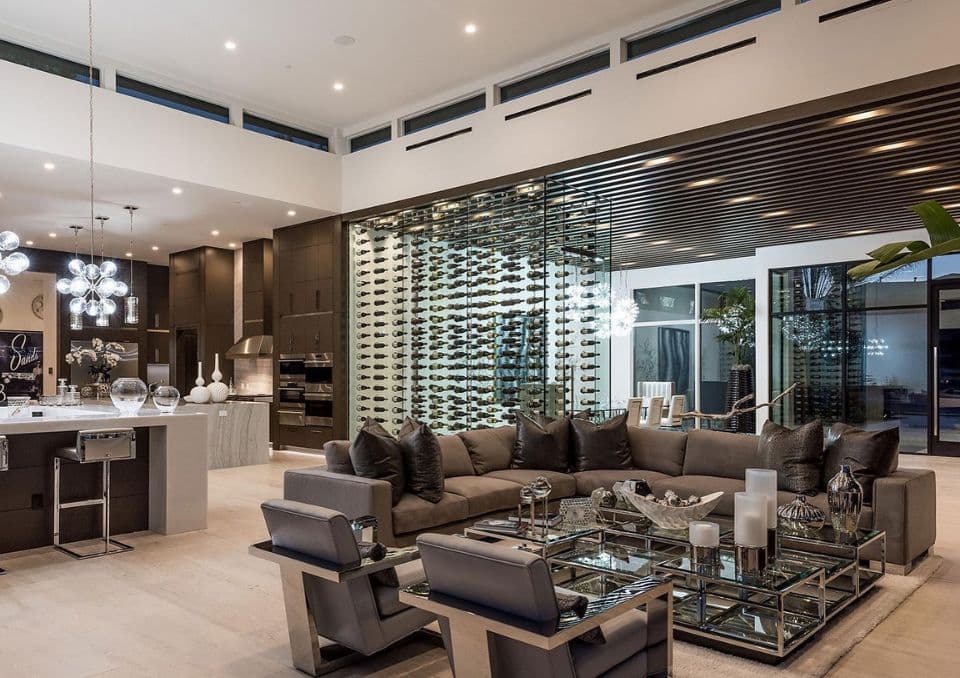
A serious wine cellar is not a vanity project. It is a controlled architecture built to protect an asset and present it with intent. Its architecture, ambiance, and long-term protection work together. By the end of this guide, you’ll have a clear handle on the main design styles, how each one performs, and how to choose the right direction for your home or venue. This playbook comes from designing cellars for private estates, penthouses, and hospitality spaces across a wide range of climates and floor plans. The aesthetic matters. Engineering matters more. Done right, you get both.
Why Wine Cellar Design Style Matters
Style is more than looks.
Pick a style and you’re choosing materials, sightlines, lighting, and how the room will behave over time.
Performance first.
Stability is non-negotiable. Traditional rooms with insulated walls tend to buffer temperature swings. Glass-forward spaces demand higher-performance glazing, tighter seals, and smarter cooling.
Capacity vs. display.
Traditional millwork packs in bottle count. Modern, gallery-like layouts lean into label presentation and clean lines. Spiral and under-stair concepts make small footprints work harder.
Architectural fit.
The cellar should feel native to the home or brand. Wood, stone, and warm light can echo classic architecture. Metal, glass, and precise shadow lines complement modern shells.
Lighting that flatters and protects.
Good LED strategies make labels read beautifully while keeping UV and heat low. Poor lighting looks harsh and can stress the wine.
The budget follows the physics.
In wood-lined rooms, the spend gravitates to premium species and joinery. In glass-heavy rooms, it shifts to high-performance glazing, hardware, and controls.
Let’s break down the options so you can see where your project lives:
Traditional Wine Cellars
Defining Features
Think premium hardwoods, carved details, and a warm, enveloping mood. Full-height racking in walnut, mahogany, or oak. Arched niches framing special bottles. Diamond bins for cases. Display rows to create rhythm. Floors in stone, herringbone, or cork to soften acoustics. Lighting stays warm and indirect, concealed strips, toe-kicks, and cove washes that make labels glow without hot spots.
Traditional custom wine cellars also excel behind the scenes. Wood mass plus insulated walls and a continuous vapor barrier create a calm thermal environment. Electrical penetrations get sealed. Cooling equipment sits in a service bay with proper drainage and access. The space feels timeless and steady.
Traditional Wine Cellars Are Best For
Collectors who value aging potential, organization, and a sense of ritual. If you’re building verticals, cellaring for the long term, or juggling mixed formats splits, 750s, magnums, up to 6L, this format handles it cleanly. It also pairs naturally with classical architecture, where glass would look out of character.
Modern And Minimalist Wine Cellars
Defining Features
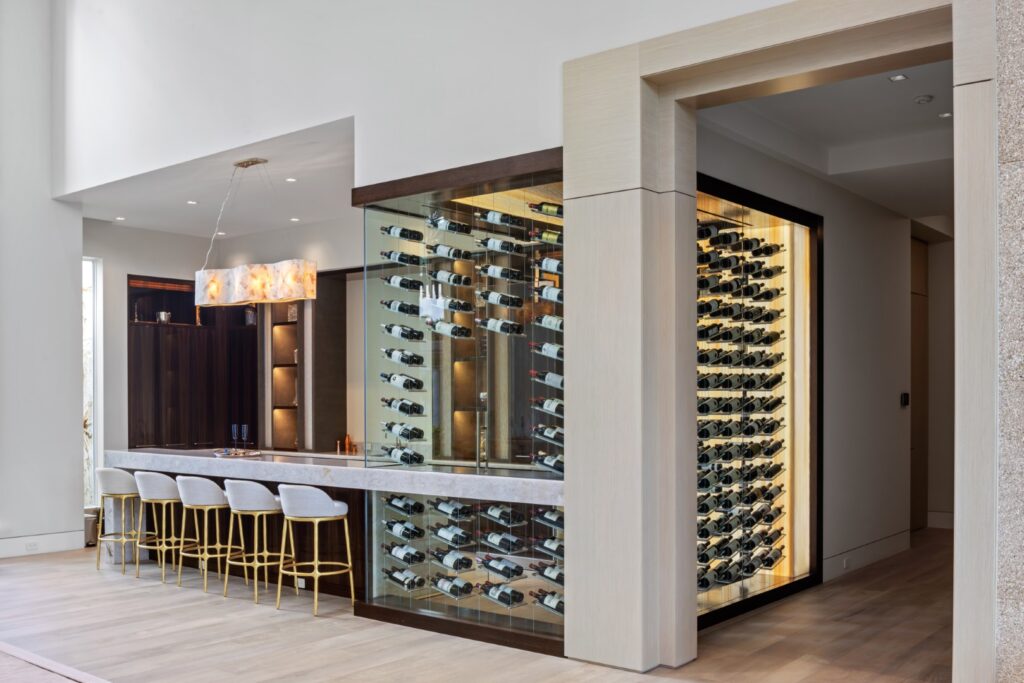
Here, the room becomes a gallery. Clean lines. Negative space. Label-forward racking on elegant pegs or rails. Low-iron glass, stainless or blackened steel, stone or microcement floors. Linear LED channels that wash labels evenly. Drivers and transformers are kept out of the conditioned envelope so the environment stays quiet and stable.
The engineering emphasis of modern wine cellars shifts to glazing and air sealing. Insulated framed assemblies with quality gaskets are the workhorse. Hardware needs to hold alignment season after season. When the details are dialed in, the cellar reads like a sculpture in the middle of an open plan, present but serene.
Modern Wine Cellars Are Best For
Contemporary homes and any space where you want a statement piece that integrates with living areas. If you like the idea of walking past your collection every day and seeing labels without visual clutter, start here.
Glass-Enclosed Wine Rooms
Defining Features
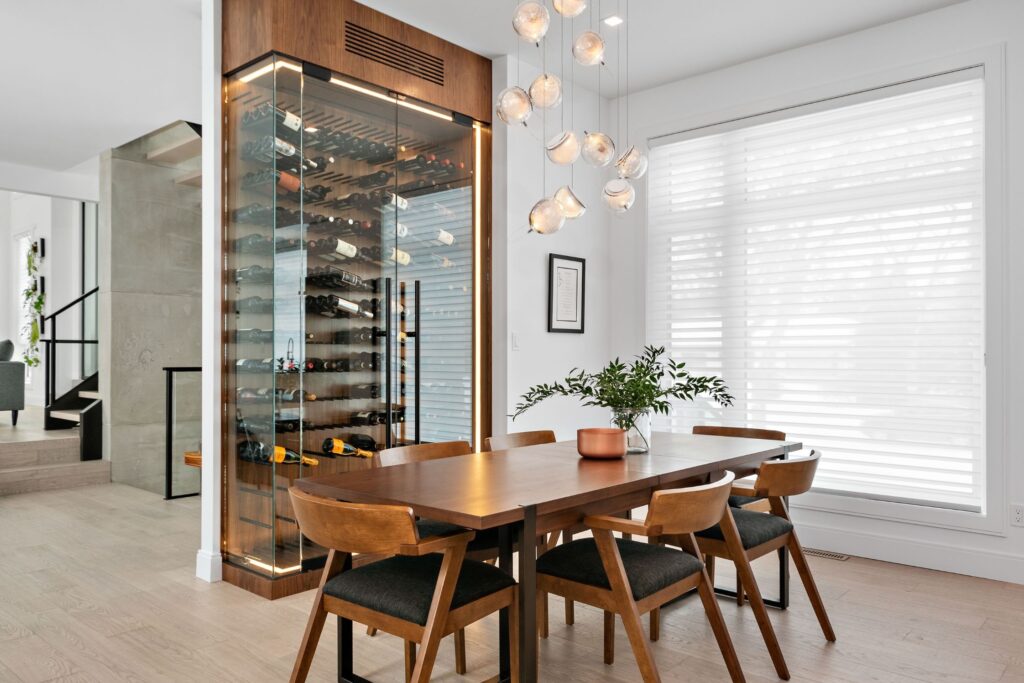
Transparency and presence. These rooms become part of the main experience of a house or restaurant off the foyer, flanking a dining room, or anchoring a hallway. Sightlines are long. Framing is minimal. Full-height doors feel effortless. Lighting does a lot of the talking: Perimeter grazers bring texture to stone, slim uplights make magnums feel weightless, and a single hero niche can showcase a rotating highlight.
Functional Considerations For Custom Glass Wine Cellars
Thermal strategy.
Glass conducts heat, so plan accordingly. Insulated, properly framed glazing with tight gaskets helps the cooling system hold setpoints. Size equipment for solar gain, lighting load, and door cycles.
Condensation management.
The bigger the temperature difference from adjacent spaces, the higher the dew-point risk. Coordinate setpoints, glazing specs, and HVAC in surrounding rooms. Design sills and thresholds with drainage and easy wipe-downs.
Light and UV.
Keep UV low with coatings, interlayers, and carefully selected LEDs. Avoid direct sun or control it with shading. Aim for dramatic, not damaging.
Hardware and acoustics.
Glass reveals everything. Use pivots and closers designed for weight and daily cycles. Keep the room quiet and the motion smooth.
Spiral Wine Cellars
Defining Features
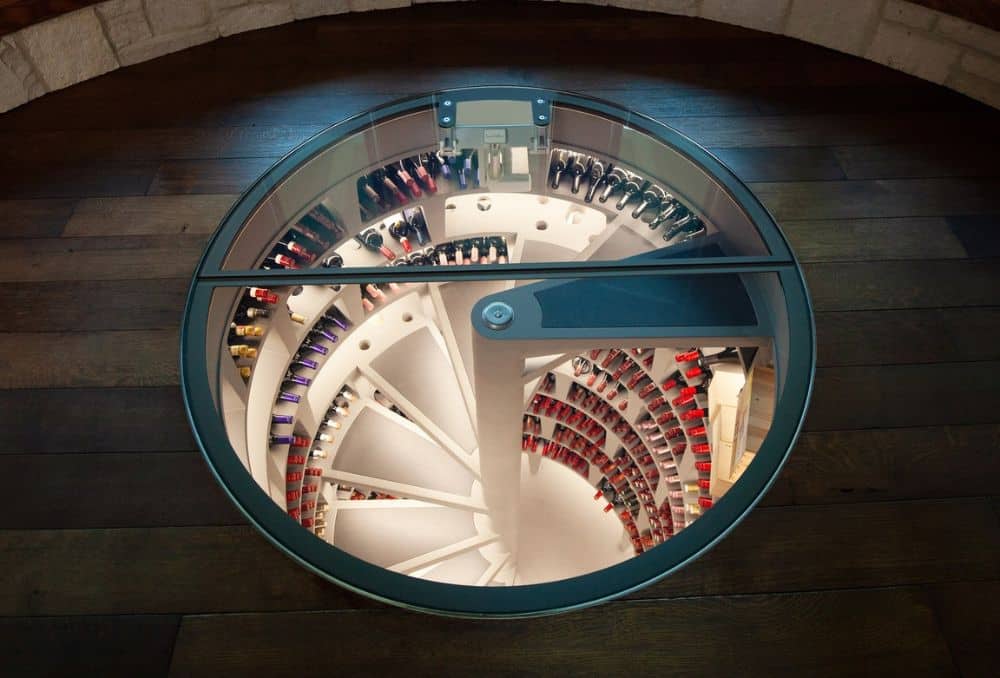
A cylindrical, in-ground cellar accessed by a round hatch or glazed door. Radial bins wrap a central spiral stair. The surrounding structure and soil act as a thermal buffer. Footprint stays compact. Capacity jumps fast. The experience has real theater open the hatch and descend into a halo of labels.
Spiral wine cellar systems are modular by depth. Each ring of bins adds capacity. Construction involves excavation, waterproofing, ventilation, and a structural lid that accepts your finished flooring. Lighting is vertical, and even so, labels read clearly down the shaft. A glazed hatch can double as a design moment in a kitchen or great room.
Space-Saving Advantage
If you don’t have a spare room or you want the collection underfoot instead of down the hall, this is a smart way to win back space. On a capacity-per-square-foot basis, spirals are hard to beat. The trade-off is ceremony: You go down to select bottles. Many owners enjoy that ritual.
Under Stairs Wine Cellars
Defining Features
These projects turn awkward geometry into a feature. Under-stair cavities and tight niches become display-quality with custom millwork, floating metal pegs, or tensioned cables. Glass guards or doors keep dust out and fingers off labels. Lighting favors grazers and toe-kicks to reduce glare and keep the look refined.
The invisible detailing matters most. Insulation and a continuous vapor barrier have to follow the envelope’s odd shapes. Closed-cell spray foam often makes sense because it insulates and seals in one pass. Cooling can be ducted from a remote location to cut noise and vibration. Service access is planned early, so filters and condensate lines aren’t buried behind finished panels.
Understairs Compact Wine Cellars Are Best For
Homeowners who are tight on space but want a striking focal point. These also shine in hospitality applications where a small display near a bar or private dining room needs to pull its weight visually. Compact doesn’t have to feel like a compromise.
Choosing The Right Style For Your Space
A simple way to get to the right answer: Define the program, fit the architecture, engineer the envelope, then set the budget. In that order:
1) Define The Program
Entertaining and/or collecting
If the room will host guests often, a glass enclosure or modern wall in a main living area earns its keep daily. If you’re building a serious aging program, a traditional room or spiral cellar gives you stability and capacity without drama.
Display percentage
Decide what portion of the collection you actually want to see. A common approach is to put 10-20% of prized bottles on show and keep the rest in high-density storage.
Access and security
Will staff or a sommelier use the room during events? Do you want locks or card access? The answers drive door hardware, sightlines, and layout.
2) Fit The Architecture
Residential harmony
Classic homes take premium woods, arches, and warm light naturally. Minimalist shells prefer glass, metal, and razor-clean details. Let the host architecture lead.
Commercial brand
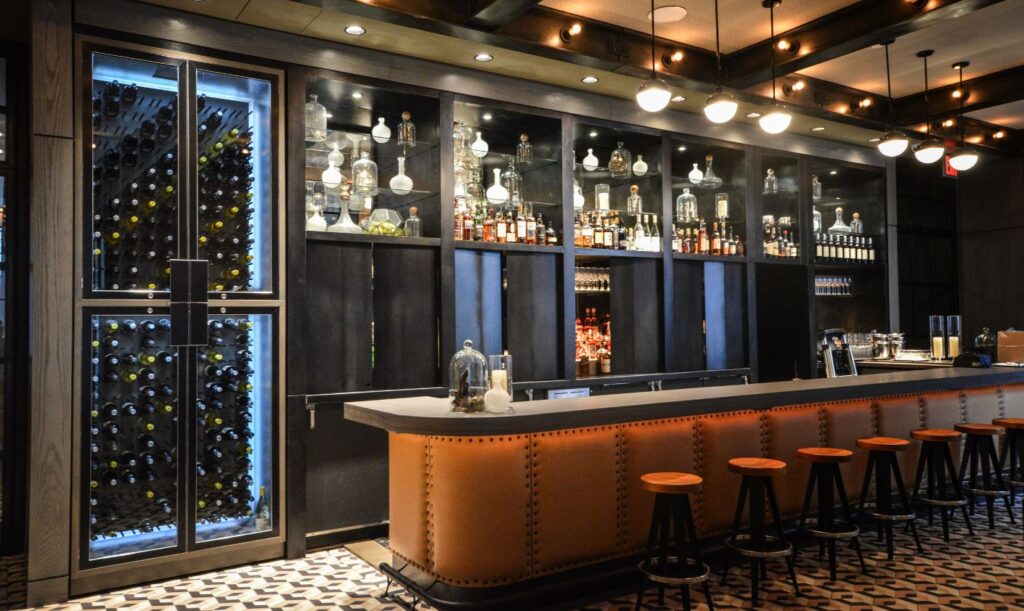
In restaurants, a glass wine cellar near the dining area doubles as a brand theater and helps sell the list. Back-of-house traditional rooms handle reserves and streamline service.
3) Engineer The Envelope
Traditional rooms
Frame and insulate like a cold room. The vapor barrier goes on the warm side and stays continuous. Every penetration gets sealed. Keep drivers and controls outside the conditioned volume.
Glass rooms
Choose insulated framed glazing with quality gaskets and hardware that holds alignment. Model dew-point risk for your climate and interior conditions. Plan shading or orientation to avoid solar hot spots.
Compact spaces
Use closed-cell spray foam to chase odd cavities. Plan equipment access and condensate management so maintenance is effortless. Protect finishes from vibration.
4) Specify The System Needs
Cooling Requirements
Size to the actual load. Consider glass area, sun exposure, proximity to kitchens, people’s heat during events, and lighting. Remote or split systems keep the room quiet.
Optimal Humidity
Moderate and consistent beats high and erratic. Place sensors where air actually touches bottles, not just in a return.
Lighting Considerations
LED only. Dimming everywhere. Use narrow beams for hero bottles and soft washes for the rest. Keep drivers accessible for service.
5) Budget With Intent
Traditional Wine Cellars
Money goes to premium woods, joinery, finishes, and cabinetry for odd formats. You typically gain capacity per dollar.
Modern/glass Wine Cellars
Spend concentrates on insulated glazing, specialty hardware, and controls. You gain integration and visual drama per dollar.
Spiral/compact Cellars
Excavation or complex geometry can be the driver, but storage density is high, and the design impact is strong.
FAQs About Wine Cellar Design Styles
What is the most popular wine cellar design style today?
Glass-forward rooms and minimalist walls are leading in new residential projects because they integrate with open plans and showcase labels. For serious long-term collecting, traditional rooms and spiral formats remain favorites thanks to stability and capacity. Pick the style that fits your use case and home, not just a trend.
Which wine cellar design style adds the most value to a home?
The winners are rooms that look native to the house and hold conditions without fuss. In many luxury homes, a well-detailed glass room in the main living area carries high perceived value. Large traditional rooms appeal to buyers who understand collecting. Either way, performance plus fit drives resale.
What’s the difference between a wine wall and a glass-enclosed wine room?
A wine wall is a shallow installation, sometimes conditioned, designed for display and quick access. A glass-enclosed room is a walk-in environment with its own envelope and dedicated cooling. One is a theater with storage. The other is storage with an integrated theater.
What’s the average cost difference between traditional vs. modern wine cellars?
Traditional rooms concentrate on wood species, racking complexity, and finishing. Modern glass rooms shift the cost to insulated glazing, hardware, and lighting control. Glass rooms often cost more per square foot; traditional rooms usually deliver more storage per dollar. Actual numbers depend on scope and region.
Which wine cellar design style works best for restaurants or commercial spaces?
Use a hybrid. A guest-facing glass room or feature wall drives sales and brand memory. A back-of-house traditional room holds reserves and protects temperature stability during service. That split keeps the floor efficient and the wine safe.
Can I combine multiple design styles in one custom wine cellar?
Absolutely. A common approach is a traditional reserve room paired with a modern display wall in a public area. Another is a glass vestibule revealing a wood-lined core. Keep environmental control where it’s needed and maintain a consistent material and lighting language.
How do I choose between a traditional and modern wine cellar for my home?
Start with lifestyle and architecture. If capacity and aging matter most, go traditional or spiral. If integration and daily visibility matter, go modern and glass-forward. In both cases, nail the envelope, cooling, humidity control, and lighting plan first. Finishes come after performance.
Bring Your Cellar Ideas To Life
Each style solves a different problem. Traditional rooms deliver calm, capacity, and a sense of heritage. Modern and minimalist rooms integrate with open plans and turn labels into art. Glass-enclosed rooms create signature moments in the home or venue. Spiral cellars mine the vertical dimension for density and drama. Under-stair and compact solutions transform leftover space into something memorable. The through-line is rigor: A stable envelope, disciplined lighting, and mechanical systems sized to the real load.
Explore the Ultimate Guide to Custom Wine Cellars for planning details, then connect with our design team. Share a floor plan and a target bottle count. We’ll translate your preferred style into a buildable concept with clear specs, a realistic investment range, and a timeline that respects your project.
Contact Us
"*" indicates required fields